#136 – The BEST Foods for the TCM Spleen (Podcast)
Listen on Apple Podcasts Listen on Spotify Listen on Amazon Music
🔗 Links mentioned in this episode:
🥑Download your Go-To Reference TCM Nutrition Guides here!
📗 Get your copy of Chinese Medicine Made Easy Book or PDF!
🩵 Curious if Jane is right for your practice? Book a free demo and get a one-month grace period with code ACUPRO1MO!
☯️ More AcuPro Episodes you’ll love:
Chinese Medicine Nutrition That Fits Real Life with Dr. Melissa Carr
Heart Health in TCM: Nutritional Strategies to Balance Body & Mind
Liver Health in TCM: Nutritional Strategies for Harmony
TCM Spleen Nutrition: How to Strengthen Digestion Naturally
Have you ever finished a meal only to feel bloated, sluggish, or like you need a nap? Or maybe you constantly crave sugar, struggle with loose stools, feel cold all the time, or find yourself dealing with brain fog that just won’t lift.
From a Chinese medicine perspective, those symptoms often point back to one incredibly important organ system: the Spleen.
Now before you picture the anatomical spleen sitting under your ribs, remember that the TCM spleen is much more than a physical organ. It’s the foundation of digestion, energy production, mental clarity, and even immune health. It’s responsible for transforming the food you eat into Qi and Blood: the fuel your entire body depends on.
Today, I’m sharing why the spleen became one of my favorite topics in Chinese medicine, the biggest mistakes I made before studying TCM, the four most common spleen patterns I see in clinic, and simple nutrition strategies that can make a huge difference for both you and your patients.
My Journey to Understanding the Spleen
Long before I became an acupuncturist, I was completely immersed in the fitness world. I was teaching aerobics, working as a personal trainer, running marathons, lifting weights. You name it. I thought I was doing everything “right.” Breakfast was usually a smoothie packed with frozen fruit. Lunch was a massive raw salad. I drank ice-cold water all day long. By Western nutrition standards, I was the picture of health. Except…I wasn’t.
I was constantly bloated. I felt cold even during the summer. My digestion wasn’t great. I had plenty of energy to exercise, but afterward I’d often feel completely drained.
Then everything changed during my doctorate studies.
One of my professors became affectionately known as the “Crazy Salad Guy.” Why? Because he constantly told us to stop eating so many salads. At first I thought he was completely crazy. Salads are healthy…right? But he explained something that completely shifted my perspective.
From a TCM standpoint, raw and cold foods require significantly more digestive energy. Your digestive system has to warm everything before it can transform it into usable Qi. If your spleen is already weak, constantly eating cold smoothies, raw vegetables, iced drinks, and frozen foods is like asking someone with exhausted muscles to run another marathon.
So I gave it a try. I swapped smoothies for oatmeal. Salads became soups and stir-fries. Ice water became room-temperature water. Within just a few weeks, my bloating dramatically improved, I wasn’t freezing anymore, and my digestion felt better than it had in years.
That experience completely transformed how I view food, and it’s one of the reasons I’m so passionate about teaching TCM nutrition today.
Why the Spleen Is So Important in Chinese Medicine
The spleen is often called the foundation of Post-Heaven Qi because it produces the Qi and Blood that nourish every tissue in the body.
Without a healthy spleen, the body simply can’t manufacture enough energy.
Its responsibilities include:
- Transforming food into Qi and Blood
- Supporting healthy digestion
- Transporting fluids throughout the body
- Holding Blood within the vessels
- Supporting muscles and limbs
- Nourishing concentration, memory, and clear thinking
When the spleen functions well, patients feel energized, focused, emotionally grounded, and digest food efficiently.
When it becomes weak, almost every system in the body can begin to suffer.
Signs Your Spleen May Need Support
Many people don’t realize how common spleen imbalances actually are.
Some of the most frequent symptoms include:
- Fatigue, especially after eating
- Bloating
- Loose stools
- Brain fog
- Heavy limbs
- Poor appetite
- Sugar cravings
- Easy bruising
- Chronic worry or overthinking
- Feeling cold easily
These symptoms often develop slowly over months or years, which is why patients sometimes think they’re simply “getting older” or that this is just how they feel.
Fortunately, nutrition can have an enormous impact.
The Four Most Common Spleen Patterns
While every patient requires an individual diagnosis, there are four spleen patterns that appear again and again in clinical practice.
1. Spleen Qi Deficiency
This is by far the most common spleen pattern.
The digestive system simply doesn’t have enough energy to efficiently transform food into Qi and Blood.
Patients often complain of fatigue after meals, bloating, loose stools, poor appetite, muscle weakness, and difficulty concentrating. They may also find themselves craving sweets because the body is searching for a quick energy boost.
The treatment principle is straightforward: strengthen the digestive fire without overwhelming it.
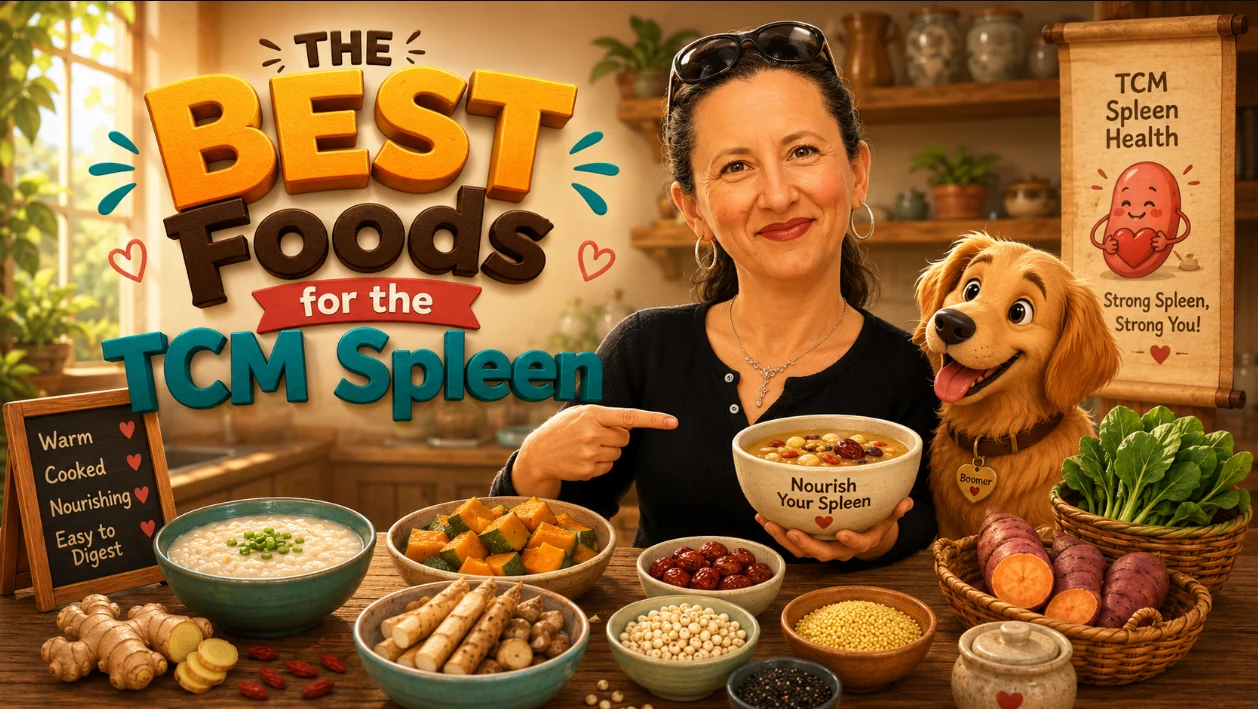
Foods that are especially helpful include:
- Warm cooked vegetables
- Sweet potatoes
- Squash
- Oats
- Rice
- Lentils
- Chicken
- Ginger
- Cinnamon
Simple soups, congee, stews, and lightly cooked meals are often much easier to digest than raw salads or smoothies.
2. Spleen Qi Sinking
Think of this as spleen Qi deficiency that has progressed further.
The spleen no longer has enough strength to “hold things up.”
Patients may experience chronic fatigue along with prolapse conditions, such as uterine prolapse, hemorrhoids, hernias, or chronic diarrhea.
Supporting foods remain similar to spleen Qi deficiency but often include richer, nourishing meals like:
- Bone broth
- Slow-cooked soups
- Root vegetables
- Astragalus herbal soups (when appropriate)
- Lean protein
These foods provide the building blocks needed to strengthen and lift Qi over time.
3. Spleen Yang Deficiency
Yang is warmth.
When spleen yang becomes deficient, digestion slows dramatically.
These patients frequently feel cold, especially in their hands, feet, and abdomen. They often prefer warm drinks, dislike cold weather, and experience loose stools that worsen after consuming cold foods.
This is where warming foods become incredibly important.
Excellent choices include:
- Ginger
- Cinnamon
- Lamb
- Beef
- Bone broth
- Oatmeal
- Congee
- Slow-cooked stews
One of the biggest recommendations I give these patients is simple:
Stop drinking ice water.
It may sound like a small change, but many patients notice a remarkable improvement just from switching to room-temperature or warm beverages.
4. Dampness Affecting the Spleen
When the spleen becomes weak, fluids begin to accumulate.
This creates what TCM calls Dampness.
Patients often feel physically heavy, mentally foggy, sluggish, and may experience bloating, mucus, sinus congestion, edema, or weight gain that’s difficult to lose.
Nutrition focuses on strengthening the spleen while reducing damp-producing foods.
Helpful foods include:
- Adzuki beans
- Barley
- Celery
- Mushrooms
- Pumpkin
- Radish
- Chamomile tea
At the same time, patients often benefit from reducing foods that contribute to dampness, such as excessive sugar, alcohol, fried foods, dairy, and heavily processed foods.
Four Everyday Habits That Support Your Spleen
Nutrition isn’t only about what you eat, it’s also about how you eat.
Some of the simplest lifestyle habits can dramatically improve digestion.
Eat seasonally
Nature generally provides exactly what our bodies need during each season. Eating foods that naturally grow during the current season often supports digestion better than relying on imported foods year-round.
Choose local whenever possible
Local foods tend to be fresher, contain more nutrients, and require less processing, making them easier for the body to digest.
Slow down during meals
Eating while driving, working, or scrolling your phone forces your body into a distracted state.
Instead:
- Sit down.
- Take a few deep breaths.
- Chew thoroughly.
- Give your digestive system the attention it deserves.
Digestion begins long before food reaches the stomach.
Honour your own constitution
Not every healthy diet works for every person.
Your genetics, cultural background, climate, activity level, and constitution all influence what foods help you thrive.
One person’s perfect breakfast may not work for someone else.
That’s exactly why individualized treatment is such a cornerstone of Traditional Chinese Medicine.
Food Is Medicine
One of my favorite things about TCM nutrition is how empowering it is.
Patients don’t have to wait weeks between acupuncture appointments to start feeling better.
Every single meal becomes another opportunity to support healing.
Every bowl of soup, every warm breakfast, every mindful meal is another step toward building stronger Qi, improving digestion, and nourishing the entire body.
Small, consistent changes often create the biggest long-term results.
Final Thoughts
Learning about spleen nutrition completely changed my own health, and it’s one of the first concepts I teach both students and patients because it’s practical, effective, and surprisingly simple to implement.
If you remember just one thing from today’s article, let it be this:
Your digestive system isn’t simply processing food—it’s creating the energy that fuels every aspect of your health.
Support your spleen with warm, nourishing foods, eat mindfully, and remember that food truly can be one of the most powerful forms of medicine.
Thanks so much for spending time with me today. If you know someone who struggles with bloating, fatigue, digestive issues, or simply wants to understand TCM nutrition better, please share this podcast with them.
Until next time, keep rocking it with TCM!
Disclaimer
The Acupro Show podcast and material shared through Acupro Academy, which is a subdivision of Natural Health Sense Incorporated. Designed solely for educational and entertainment purposes. The utilization of information from this podcast or any associated material is at the user’s discretion and risk. This content is not meant to replace the guidance of an acupuncturist. Nor a Chinese medicine doctor, medical doctor, physician, or any qualified professional. It is not a substitute for proper diagnosis or treatment. Users are strongly advised not to ignore or postpone seeking medical advice for any existing medical condition with their healthcare professional, regarding any health concerns.
Need the podcast transcript? Click here!
Share this article