#128 – Heart Health in TCM: Nutritional Strategies to Balance Body & Mind (Podcast)
Listen on Apple Podcasts Listen on Spotify Listen on Amazon Music
🔗Links mentioned in the episode:
🎁Get your FREE TCM Nutrition PDF here!
The 5 Spirits in Chinese Medicine
Gut Health in Naturopathic Medicine & Chinese Medicine with Dr. Alex Dragan
☯️ More AcuPro Episodes you’ll love:
Differentiating TCM Heart Symptoms for Proper Diagnosis
The BEST Acupuncture Points for Sadness, Grief & a Broken Heart
How to Use Acupuncture & TCM for Insomnia
Nourishing the Heart in Summer: A TCM Guide to Emotional & Physical Balance
Summer is the season of the Heart in TCM. It’s the season of warmth, expansion, connection, joy, and activity. In Chinese medicine, the Heart is considered the Emperor of all organs because it governs not only blood circulation, but also the mind, emotions, consciousness, and spirit: what we call the Shen.
When the Heart is balanced, we feel emotionally grounded, mentally clear, socially connected, and joyful. Sleep feels restorative, our thoughts are calm, and we move through life with a sense of ease. But when the Heart becomes imbalanced, symptoms can show up physically, emotionally, and mentally.
During summer, the fire element naturally becomes stronger, which means the Heart is more active, but also more vulnerable. Excess heat, emotional stress, overwork, dehydration, poor sleep, and constant stimulation can easily disturb the Heart and Shen during this season.
This is why heart nourishment becomes so important in the warmer months.
In TCM, prevention is everything. Supporting the Heart before imbalance develops helps maintain healthy sleep, emotional resilience, mental clarity, and overall vitality throughout summer.
Understanding the Heart in TCM
In Western medicine, the heart is primarily viewed as a pump circulating blood through the body. In Chinese medicine, however, the Heart has a much broader role. It houses the Shen, which refers to the spirit, consciousness, emotions, and mental activity.
This is why symptoms like insomnia, anxiety, palpitations, poor memory, restlessness, and emotional overwhelm are often connected to Heart imbalances in TCM.
The Heart also opens into the tongue and manifests in the complexion. So when someone has a bright complexion and sparkling eyes, we often say their Shen is vibrant. On the other hand, disturbed sleep, dullness in the eyes, anxiety, or agitation can indicate the Heart is struggling to maintain balance.
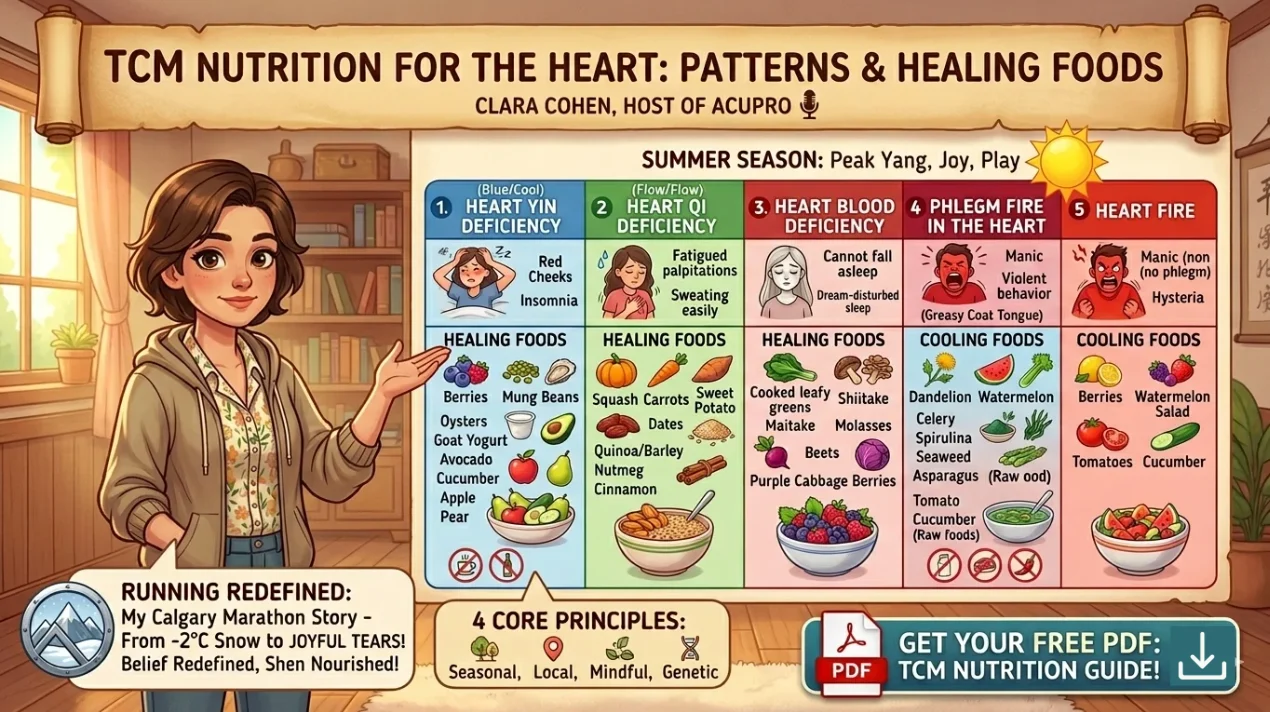
Heart Yin Deficiency
One of the most common patterns we see today is Heart Yin Deficiency. This tends to occur in people who are constantly “on,” overworked, stressed, sleep deprived, emotionally exhausted, or burning the candle at both ends.
Yin represents cooling, nourishing, moistening energy. When Yin becomes depleted, internal heat rises.
Patients with Heart Yin Deficiency often describe feeling “wired but tired.” They’re exhausted, yet their mind won’t shut off.
Common symptoms may include insomnia, night sweats, palpitations, anxiety, vivid dreams, restlessness, dry mouth at night, and feeling hot in the evening. Menopause, chronic stress, long-term emotional strain, excessive caffeine, and overwork can all contribute to this pattern.
To nourish Heart Yin, focus on cooling and hydrating foods such as:
- Goji berries
- Tomatoes
- Spinach and leafy greens
- Pears
- Watermelon
- Flaxseeds and walnuts
- Black sesame seeds
Lifestyle habits matter just as much as nutrition. Prioritizing rest, reducing overstimulation, limiting screen time before bed, and creating moments of stillness can significantly help calm the Shen.
Heart Qi Deficiency
Heart Qi Deficiency is more about depletion and exhaustion. This pattern develops when the Heart lacks enough energy to properly circulate blood and support emotional and mental vitality.
These patients are often tired, overwhelmed, and mentally drained. They may experience shortness of breath, spontaneous sweating, fatigue, low motivation, palpitations, and difficulty concentrating.
This pattern commonly develops from chronic stress, excessive mental work, illness, or simply pushing too hard for too long without proper recovery.
In Chinese medicine, warm and nourishing foods help strengthen Heart Qi. Think comforting meals that support digestion and energy production rather than cold or raw foods that can weaken the digestive system further.
Helpful foods include:
- Oats and barley
- Sweet potatoes
- Red dates
- Longan fruit
- Lentils and beans
- Chicken or turkey
- Warm soups and stews
Gentle movement like walking, tai chi, qigong, or restorative exercise is often more beneficial than intense workouts for these patients.
Heart Blood Deficiency
Heart Blood Deficiency is incredibly common, especially in women. It often overlaps with Liver Blood Deficiency and can develop after childbirth, heavy menstruation, chronic stress, restrictive dieting, or years of overworking without proper nourishment.
When the Heart lacks blood nourishment, the Shen loses its anchor.
These patients may experience anxiety, poor memory, dizziness, insomnia, palpitations, dream-disturbed sleep, and a pale complexion. Many people with Heart Blood Deficiency also struggle to fall asleep because the mind feels restless at night.
Nourishing Blood requires deeply restorative foods. Slow-cooked meals are often especially beneficial because they’re easier to digest and more building in nature.
Blood-building foods include:
- Beets
- Cherries
- Dark leafy greens
- Eggs
- Bone broth
- Black beans
- Dates
- Slow-cooked stews
This is also a reminder that digestion plays a huge role in TCM. The Spleen must properly transform food into Qi and Blood, which means eating regular, nourishing meals is essential.
Heart Fire
Heart Fire is an excess heat condition affecting both the Heart and Shen. Unlike deficiency patterns, Heart Fire tends to present with more intensity and agitation.
Patients may experience insomnia, mouth ulcers, anxiety, irritability, restlessness, palpitations, a red face, or a sensation of internal heat. Emotionally, there may be excessive excitement, agitation, or feeling mentally overstimulated.
This pattern can develop from emotional stress, unresolved frustration, excessive spicy foods, alcohol, lack of sleep, or too much stimulation over time.
Cooling foods can help clear Heart Fire and calm the system. Some helpful options include cucumber, watermelon, celery, mint, chrysanthemum tea, bitter greens, and lotus seed tea.
Summer is also a good time to reduce excess caffeine and alcohol, especially for patients already showing signs of heat.
Phlegm Fire in the Heart
Phlegm Fire is essentially Heart Fire combined with phlegm obstruction. In TCM, phlegm isn’t just mucus. It can also refer to mental fog, emotional heaviness, confusion, and obstruction within the body.
This pattern is more severe and may present with insomnia, severe anxiety, panic attacks, racing thoughts, emotional instability, agitation, or mental overwhelm.
Diet becomes extremely important here. Heavy, greasy, sugary, and dairy-rich foods can worsen phlegm accumulation and contribute to further imbalance.
Patients benefit from lighter meals and foods that help clear heat while resolving phlegm, such as mung beans, celery, bitter melon, rice porridge, and lightly cooked vegetables.
Equally important is calming the nervous system and reducing emotional overload.
Supporting the Heart During Summer
Summer is naturally a very yang season. Energy rises upward and outward, making us more social, active, and externally focused. While this energy can feel wonderful, too much stimulation without balance can disturb the Heart and Shen.
This season is a beautiful reminder to slow down enough to truly nourish yourself.
Simple practices can make a huge difference:
- Prioritize restful sleep
- Stay hydrated
- Spend time outdoors
- Avoid overworking
- Make space for joy and connection
- Reduce overstimulation when possible
- Eat seasonal, hydrating foods
The emotion associated with the Heart is joy, but even joy can become excessive when life becomes nonstop stimulation and activity. Balance is always the goal in Chinese medicine.
Final Thoughts
The Heart is so much more than a physical organ in Chinese Medicine. It influences our emotional wellbeing, sleep, mental clarity, relationships, and overall sense of vitality.
By supporting the Heart through nutrition, lifestyle, emotional balance, and seasonal awareness, we can help create greater harmony throughout the body and mind.
Whether you’re experiencing anxiety, insomnia, burnout, palpitations, or simply feeling emotionally depleted, nourishing the Heart can have profound effects on overall health.
Listen to your body, slow down when needed, protect your Shen, and remember that healing often begins with balance.
And as always—keep rocking it with TCM!
Disclaimer
The Acupro Show podcast and material shared through Acupro Academy, which is a subdivision of Natural Health Sense Incorporated. Designed solely for educational and entertainment purposes. The utilization of information from this podcast or any associated material is at the user’s discretion and risk. This content is not meant to replace the guidance of an acupuncturist. Nor a Chinese medicine doctor, medical doctor, physician, or any qualified professional. It is not a substitute for proper diagnosis or treatment. Users are strongly advised not to ignore or postpone seeking medical advice for any existing medical condition with their healthcare professional, regarding any health concerns.
Need the podcast transcript? Click here!
Share this article

Written by : AcuPro Academy (Clara)
Related Posts






Latest articles

October 20, 2026

October 20, 2026