
The Most Powerful Distal Points in Acupuncture
Have you ever wondered why you can needle a point near the ankle and completely relieve neck pain? Or why treating the hand can improve a toothache or sinus congestion?
If you’ve ever been amazed by how distal acupuncture points work, you’re not alone. In fact, they’re some of my favorite tools to use in clinic because they beautifully demonstrate one of the core principles of Chinese Medicine: treating the entire channel instead of simply treating the symptom.
Whether you’re a student learning channel theory or an experienced practitioner looking to refine your treatments, mastering distal acupuncture points can completely transform your clinical results.
Today, I’m sharing my nine favorite distal acupuncture points. Points I return to over and over again because they’re incredibly versatile, clinically effective, and rooted in classical Chinese medicine.
Are you ready? Let’s do this!
Clara
TCM Geek
Links mentioned in this video:
🤓 How to Select AcuPoints Masterclass
📚 AcuPro Books & Online Courses
💌 Sign up for my free Newsletter
The Most Powerful Distal Points in Acupuncture
Why Are Distal Acupuncture Points So Powerful?
One of the biggest misconceptions new practitioners have is thinking they always need to needle directly where the pain is.
While local points certainly have their place, distal points often create even more dramatic results.
Why?
Because acupuncture works through the meridian system.
Each meridian forms a continuous pathway of Qi that connects different regions of the body. When you stimulate a point farther away from the painful area, you’re influencing the entire channel, encouraging Qi and Blood to move freely along its course.
Distal points also tend to be areas where Qi is more accessible and less obstructed than around an injured or inflamed region.
This is why distal needling forms the foundation of many classical acupuncture systems, including:
- Balance Method Acupuncture
- Master Tung Acupuncture
- Channel Theory
- Classical Chinese Medicine
In many cases, I’ll begin with distal points first, allowing the channel to open before adding local or A-shi points if they’re still needed. It’s a simple strategy that often produces better results while making treatment more comfortable for the patient.
1. Stomach 36
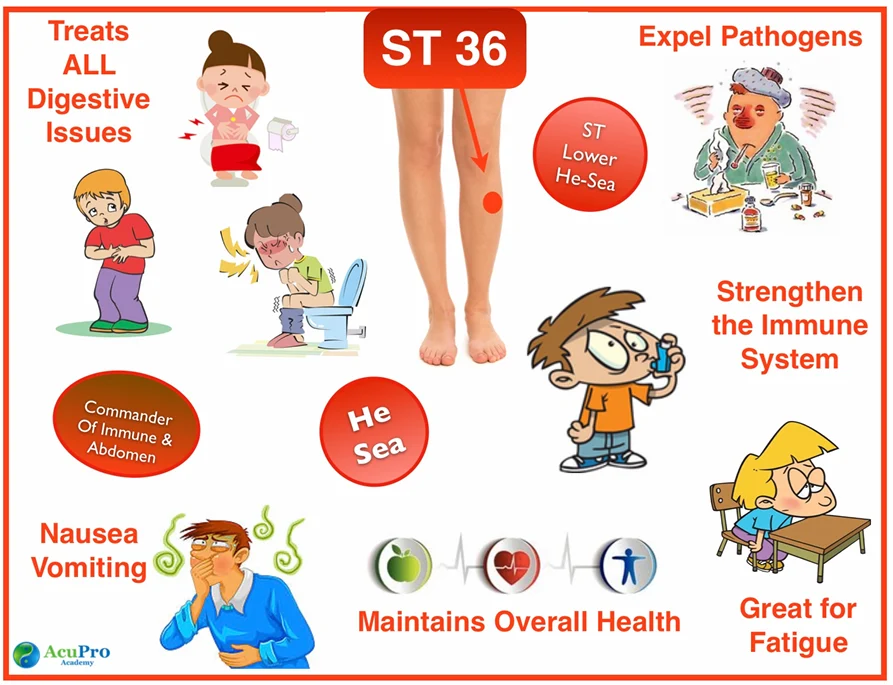
If I could only keep one acupuncture point for the rest of my career, Stomach 36 would certainly make the shortlist.
Located below the knee, Stomach 36 is famous for strengthening the body’s overall vitality. Although it’s found on the lower leg, it’s considered the Commander Point of the abdomen and digestive system because of its profound effect on the entire Stomach channel.
I reach for this point constantly when patients present with digestive complaints, fatigue, immune weakness, or chronic illness.
Some of my favorite uses include:
- Supporting digestion
- Tonifying Qi and Blood
- Strengthening immunity
- Recovering after illness
- Improving overall energy
Whenever someone feels depleted, Stomach 36 is usually somewhere in my treatment plan.
2. Large Intestine 4
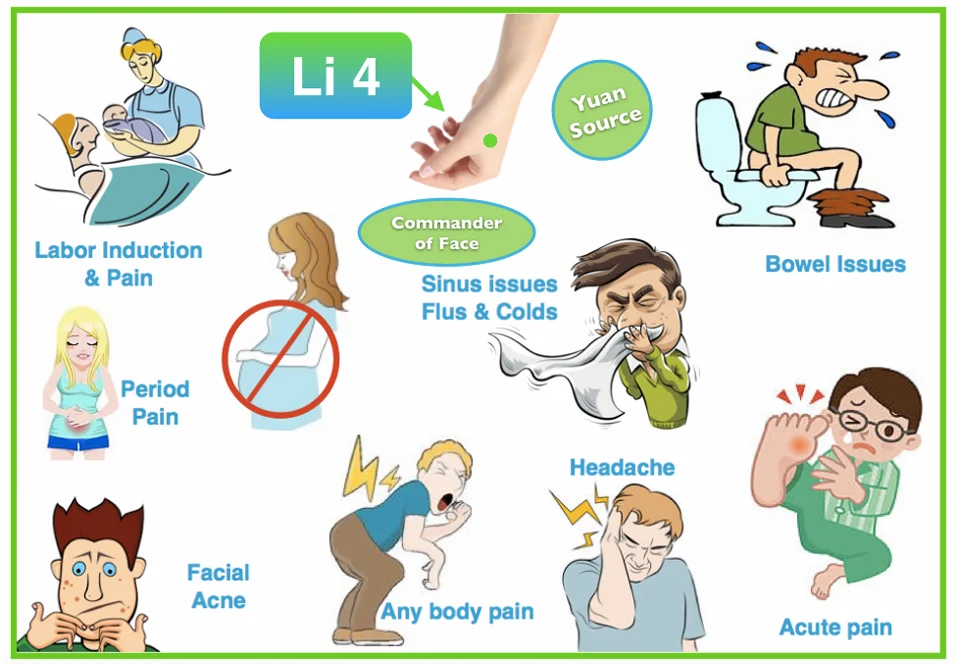
Large Intestine 4 may be one of the most frequently used acupuncture points in the world, and for good reason.
Located on the hand, it serves as the Commander Point for the face and mouth.
Because the Large Intestine channel travels from the index finger all the way to the face, this point is incredibly effective for treating conditions like:
- Sinus congestion
- Tooth pain
- Facial paralysis
- Jaw pain
- Headaches
It’s also one of the best general pain-relieving points in acupuncture.
When combined with Liver 3, it creates the famous Four Gates, one of the most powerful point combinations for moving Qi, reducing pain, and relieving stress throughout the body.
Remember that Large Intestine 4 is contraindicated during pregnancy because of its strong descending action.
3. Spleen 6
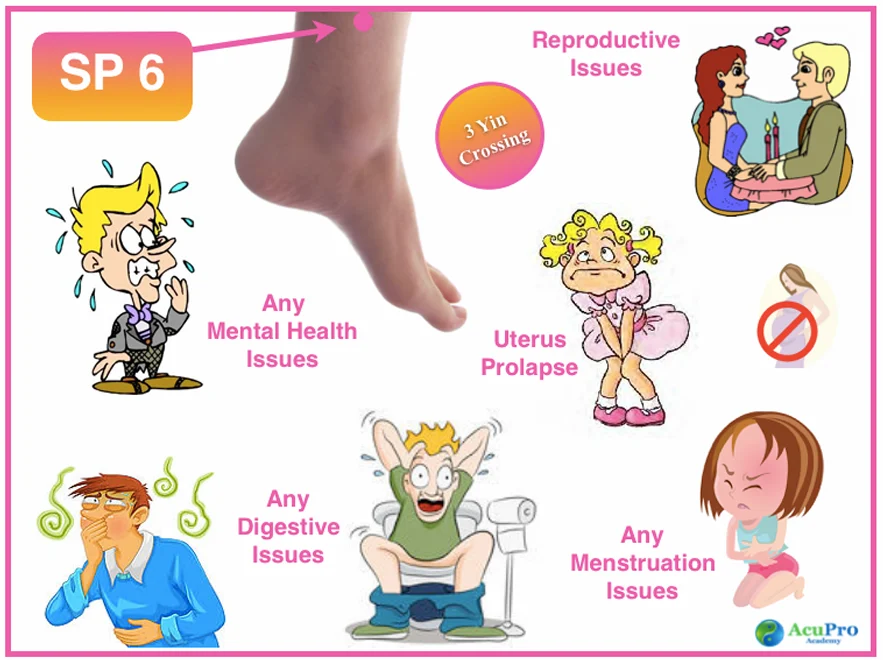
Spleen 6 is another point that rarely stays out of my treatments for long.
Known as the meeting point of the Spleen, Liver, and Kidney channels, it influences three of the body’s most important yin organs simultaneously.
This makes it remarkably versatile.
I often use it for:
- Women’s health
- Menstrual disorders
- Fertility support
- Digestive concerns
- Sleep issues
- Anxiety
- Nourishing Blood and Yin
Because it has such a profound effect on the uterus, it is contraindicated during pregnancy unless you’re intentionally trying to induce labor under appropriate circumstances.
4. Lung 7
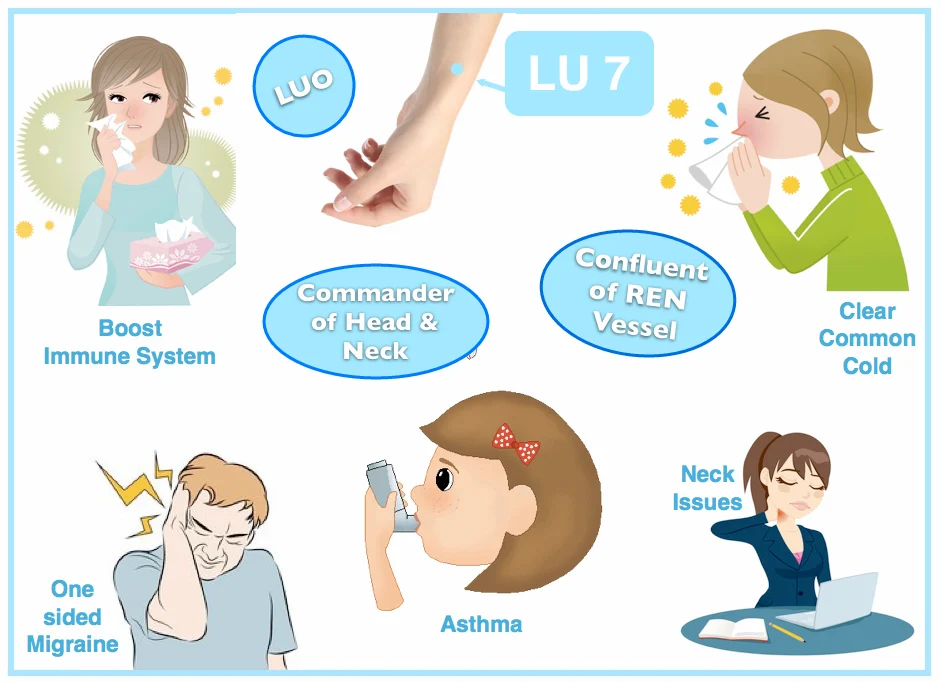
Neck pain?
Headaches?
Sore throat?
Lung 7 is one of my first considerations.
Although it’s located near the wrist, Lung 7 is considered the Commander Point for the head and neck. It also opens the Ren Mai (Conception Vessel), making it an incredibly valuable point for reproductive health, respiratory conditions, and throat disorders.
One of my favorite combinations is Lung 7 paired with Bladder 60 for neck pain.
The results can be surprisingly effective, especially when the patient moves their neck during treatment.
5. Bladder 40
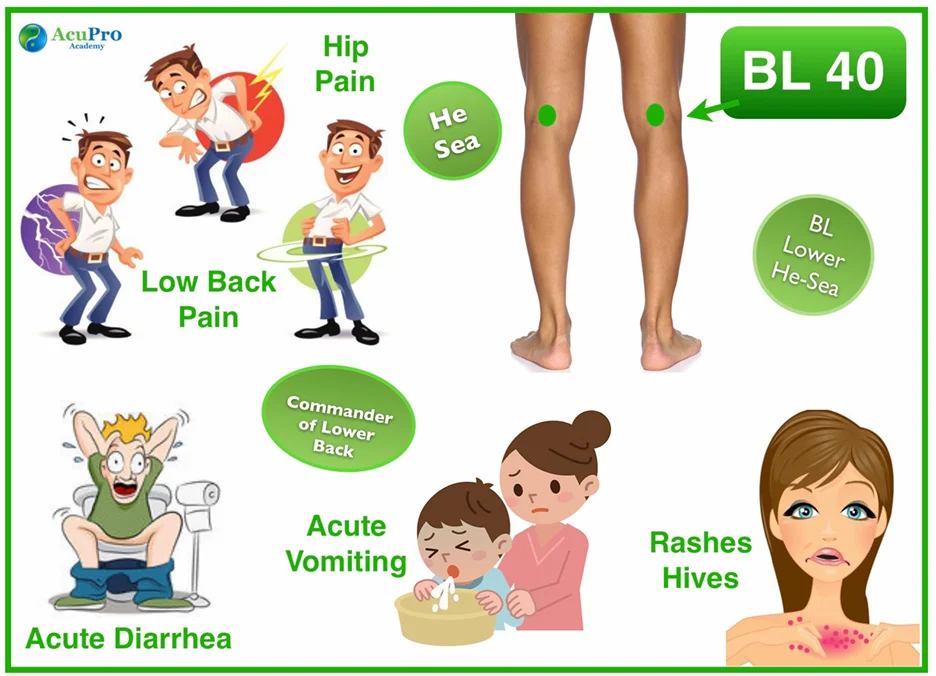
Bladder 40 is affectionately known as the Commander Point of the lower back.
Whenever someone walks into clinic complaining of lumbar pain or sciatica, this point immediately comes to mind.
Located behind the knee, it works because the Bladder channel runs along the entire posterior aspect of the body, directly influencing the spine.
It’s particularly helpful for:
Many practitioners find that combining distal channel points like Bladder 40 with local treatment creates exceptional outcomes.
6. Bladder 60
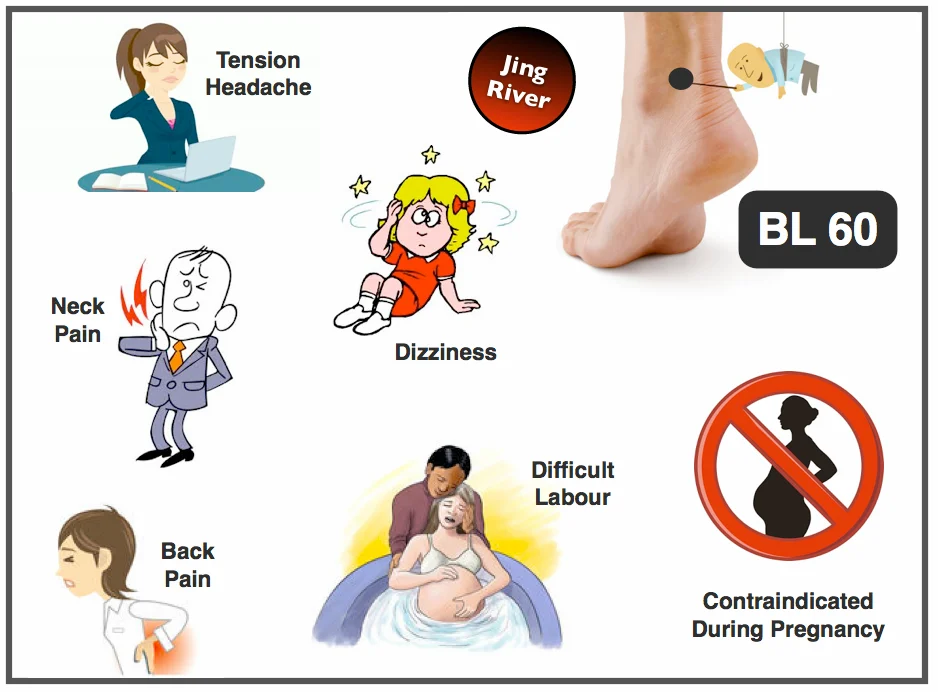
Bladder 60 sits just behind the lateral malleolus and is one of my favorite distal points for treating the entire posterior chain.
Although it’s located at the ankle, it has a remarkable ability to relieve:
- Neck pain
- Occipital headaches
- Back pain
- Shoulder tension
It’s another excellent example of channel theory in action.
When patients are amazed that their neck improves after you needle their ankle, it’s a wonderful opportunity to explain how meridians connect different parts of the body.
7. Pericardium 6
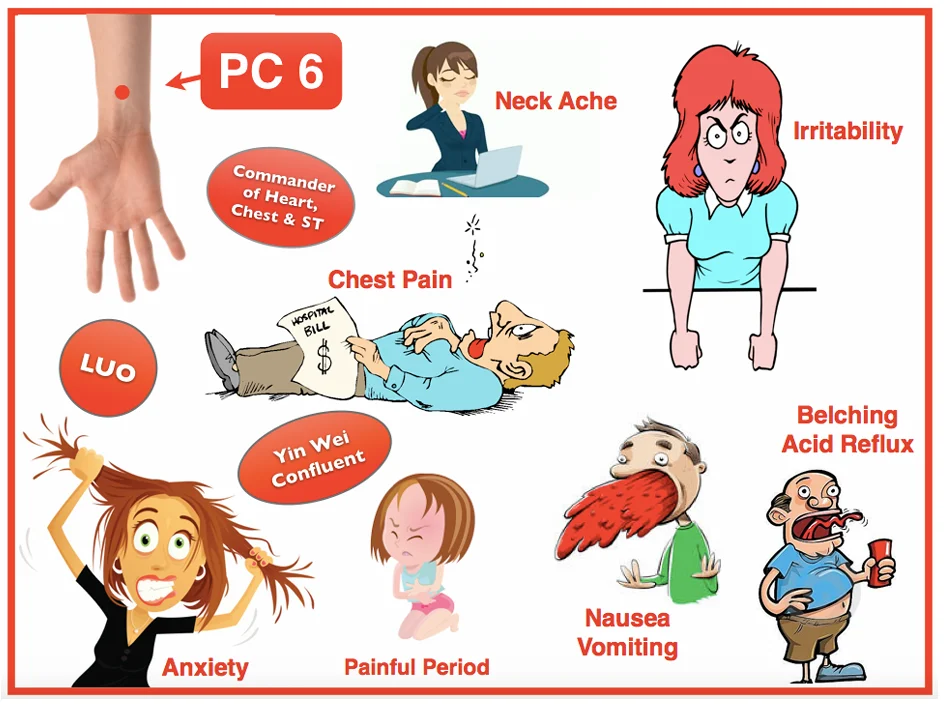
Pericardium 6 is one of the most versatile points in all of acupuncture.
Many people know it for nausea. It’s even used in hospitals for postoperative nausea and morning sickness, but its applications go far beyond digestion.
This point has a profound calming effect on the Shen.
I frequently use it for patients experiencing:
- Anxiety
- Stress
- Panic attacks
- Palpitations
- Chest tightness
- Motion sickness
- Nausea and vomiting
When paired with Spleen 4, it opens the Yin Wei Mai and becomes an incredibly powerful combination for treating disorders of the chest, emotions, and digestion.
8. Stomach 38
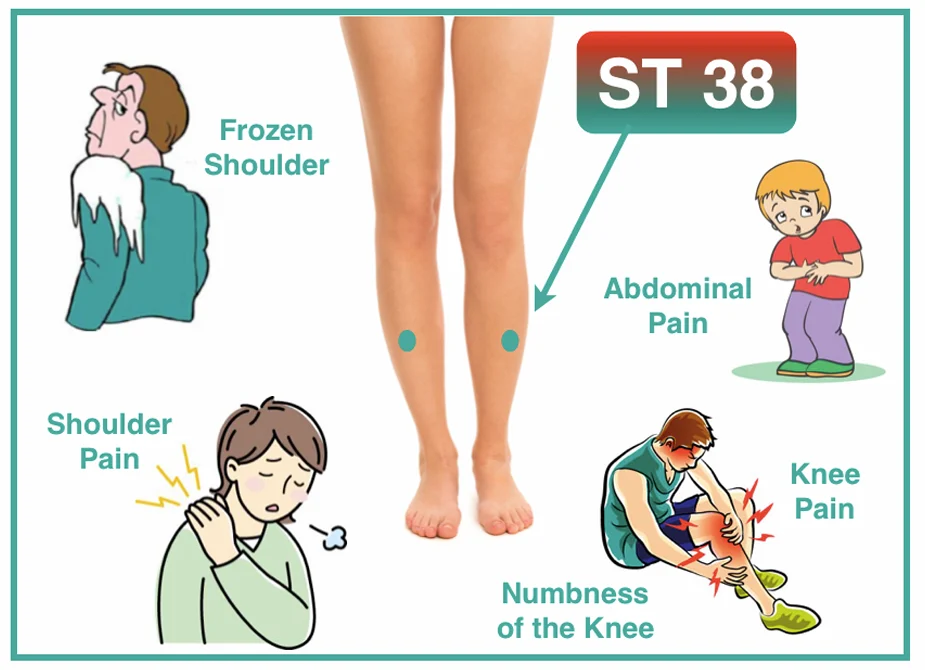
This point often surprises students.
How can a point on the lower leg improve shoulder pain?
The answer once again lies in channel theory.
Stomach 38 is considered one of the best distal points for frozen shoulder and restricted shoulder mobility.
I often needle it on the opposite side of the affected shoulder while asking the patient to slowly move the painful arm during treatment.
The improvements can be immediate and dramatic.
It’s one of those points that reminds us just how elegant classical acupuncture really is.
9. Kidney 1
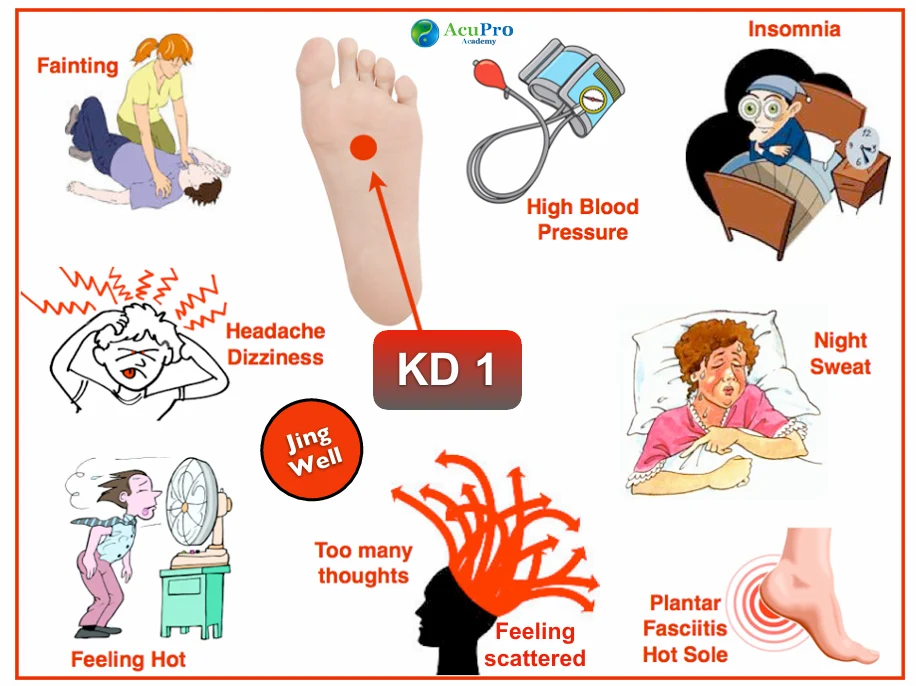
Last, but certainly not least, is Kidney 1.
As the only acupuncture point found on the sole of the foot, Kidney 1 has an incredibly grounding quality.
Whenever someone feels scattered, anxious, overwhelmed, or emotionally “stuck in their head,” I often think of this point.
It’s commonly used for:
- Anxiety
- Insomnia
- High blood pressure
- Excess Yang rising
- Calming the Shen
- Grounding the mind
Even encouraging patients to spend time walking barefoot on natural ground aligns beautifully with the energetic principles behind Kidney 1.
A Simple Clinical Tip
One clinical pearl I’d love to leave you with is this:
Whenever you’re treating pain, don’t automatically reach for the local area first.
Instead, begin by selecting distal points along the affected channel.
Allow the meridian to open and Qi to move before deciding whether local Ashi points are still necessary.
You’ll often find patients experience significant relief with fewer needles, making treatments both effective and comfortable.
Distal acupuncture is one of the greatest strengths of Chinese medicine. It reminds us that we aren’t simply treating isolated body parts. We’re treating an interconnected network of Qi, Blood, and meridians.
Once you begin thinking in channels instead of symptoms, your treatments become more elegant, efficient, and clinically powerful.
Final Thoughts
I hope this overview helps you appreciate just how powerful distal acupuncture points can be.
Whether you’re studying for exams, building confidence in clinic, or simply looking to improve your point selection, mastering these nine points will serve you throughout your entire acupuncture career.
If you’d like to dive even deeper into point selection, channel theory, and creating effective treatments, be sure to check out my Acupuncture Point Selection Masterclass.
Until next time, keep learning, keep exploring the channels, and as always… keep rocking it with TCM!
Share this article

Written by : AcuPro Academy (Clara)
Related Posts






Latest articles

October 24, 2026
October 24, 2026

October 24, 2026