
TOP 5 Lung Channel Acupuncture Points You Need to Use in Practice!
The Lung channel may only have 11 acupuncture points, but it gives us some incredibly powerful tools for clinical practice. There are five points in particular that I find myself returning to again and again. I use these when treating everything from respiratory conditions and sore throats to headaches, allergies, and emotional distress.
In this video, I’m sharing five of my favourite Lung channel points. I’ll also share an honourable mention and, at the end, one of my go-to acupuncture combinations for chronic asthma.
Let’s do this!
Clara
TCM Geek
Links mentioned in this video:
💌 Sign up to my FREE newsletter here!
📙 Get your copy of AcuPoints Made Easy Book or PDF!
🩵 Curious if Jane is right for your practice? Book a free demo and get a one-month grace period with code ACUPRO1MO!
TOP 5 Lung Channel Acupuncture Points You Need to Use in Practice!
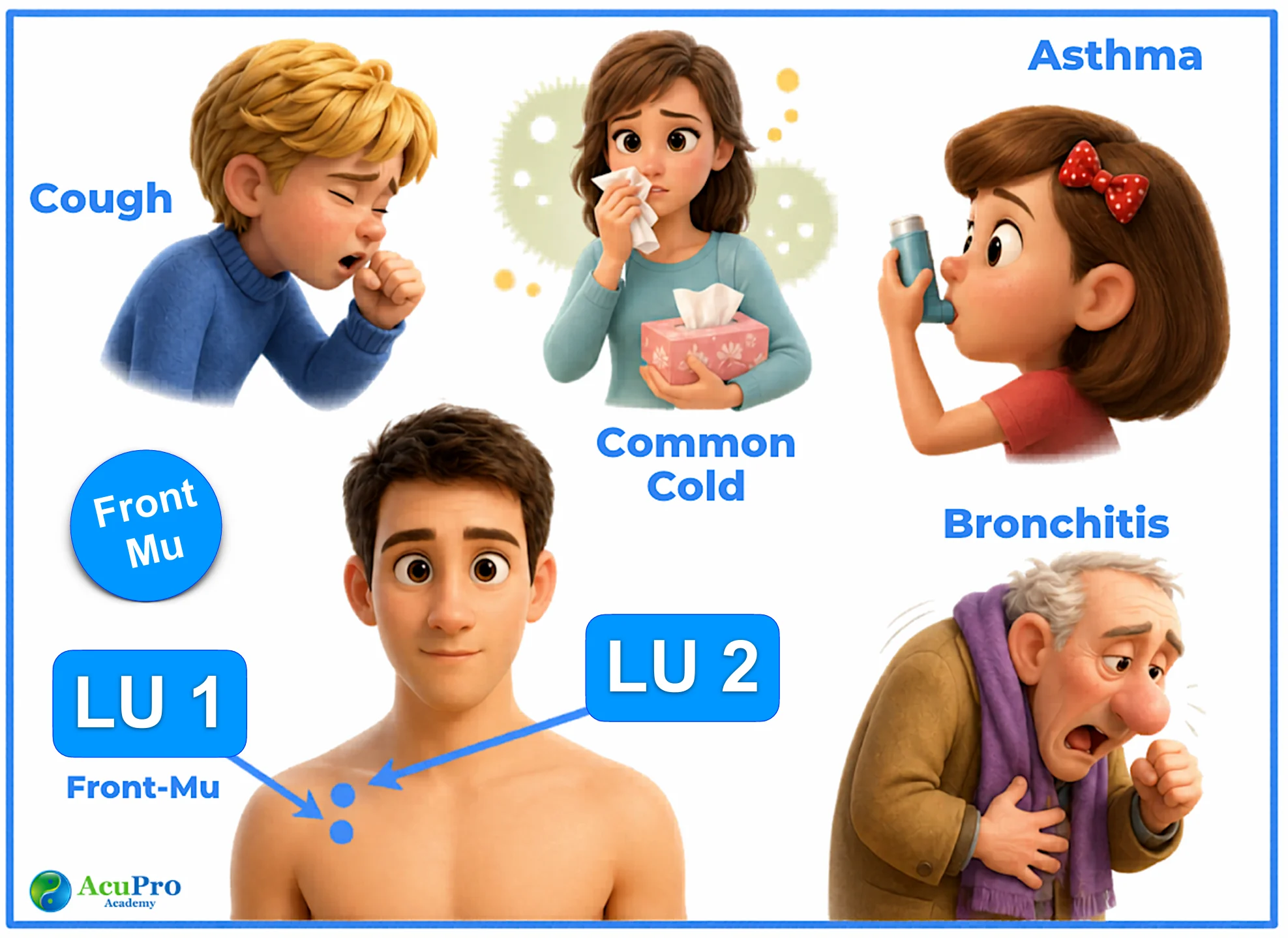
Lung 1: The Front-Mu Point of the Lung
Let’s start with Lung 1 one of the most important points to remember when working with Lung disorders.
Acupoint Lung 1 is the Front-Mu point of the Lung, making it a powerful point to consider when treating a variety of respiratory conditions. It can be particularly useful for presentations involving asthma, bronchitis, COPD, and coughs.
It’s located on the chest, just above the hollow of the deltopectoral triangle, one cun below Lung 2.
Front-Mu and Back-Shu points are some of my favourite acupuncture points because of their close relationship with the organs. Additionally, their ability to be incorporated into a variety of treatment strategies.
If you’re still unsure about how to use Front-Mu and Back-Shu points in your treatments, this is definitely an area worth exploring further. Understanding how these points work can give you another valuable framework for approaching internal organ disharmonies.
For respiratory complaints, Lung 1 is always a point I keep in mind.
Lung 5: Clearing Lung Heat
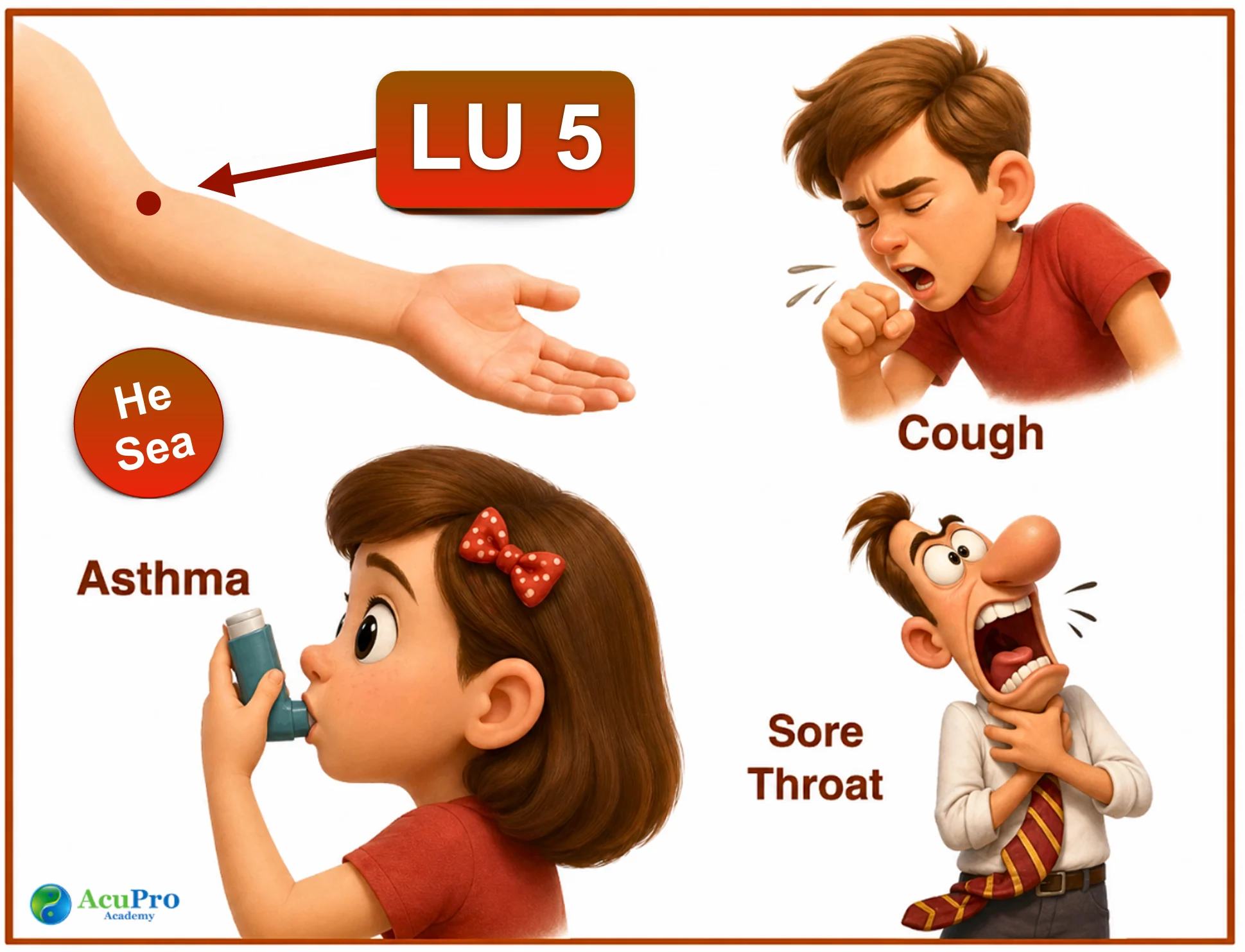
Next up is Lung 5, the He-Sea point of the Lung channel.
One of the primary reasons I love Lung 5 is its ability to clear Lung Heat. This makes it particularly useful when heat is contributing to respiratory symptoms.
Think about acute sore throats, coughs, and asthmatic symptoms where Lung Heat may be part of the underlying TCM pattern.
Acupoint Lung 5 also has a special place in my own clinical experience because of my mother. She was a long-time smoker and had struggled with a chronic cough. After using Lung 5, she experienced significant relief and was able to sleep better.
Of course, every patient is different, and a thorough TCM diagnosis is always important. But experiences like this remind me why I love acupuncture so much. Sometimes, a point that seems simple can make a meaningful difference in someone’s quality of life.
When I think about Lung 5, I think about clearing heat and supporting the Lung in respiratory presentations where heat is involved.
Lung 7: The Commander of the Head and Neck
If you’ve followed me for a while, you’ll know that Lung 7 is one of the points I use all the time.
Acupoint Lung 7 is often described as the commander point of the head and neck. This makes it a valuable point to consider for conditions such as migraines, neck pain, and occipital headaches.
But that’s certainly not all this point can do.
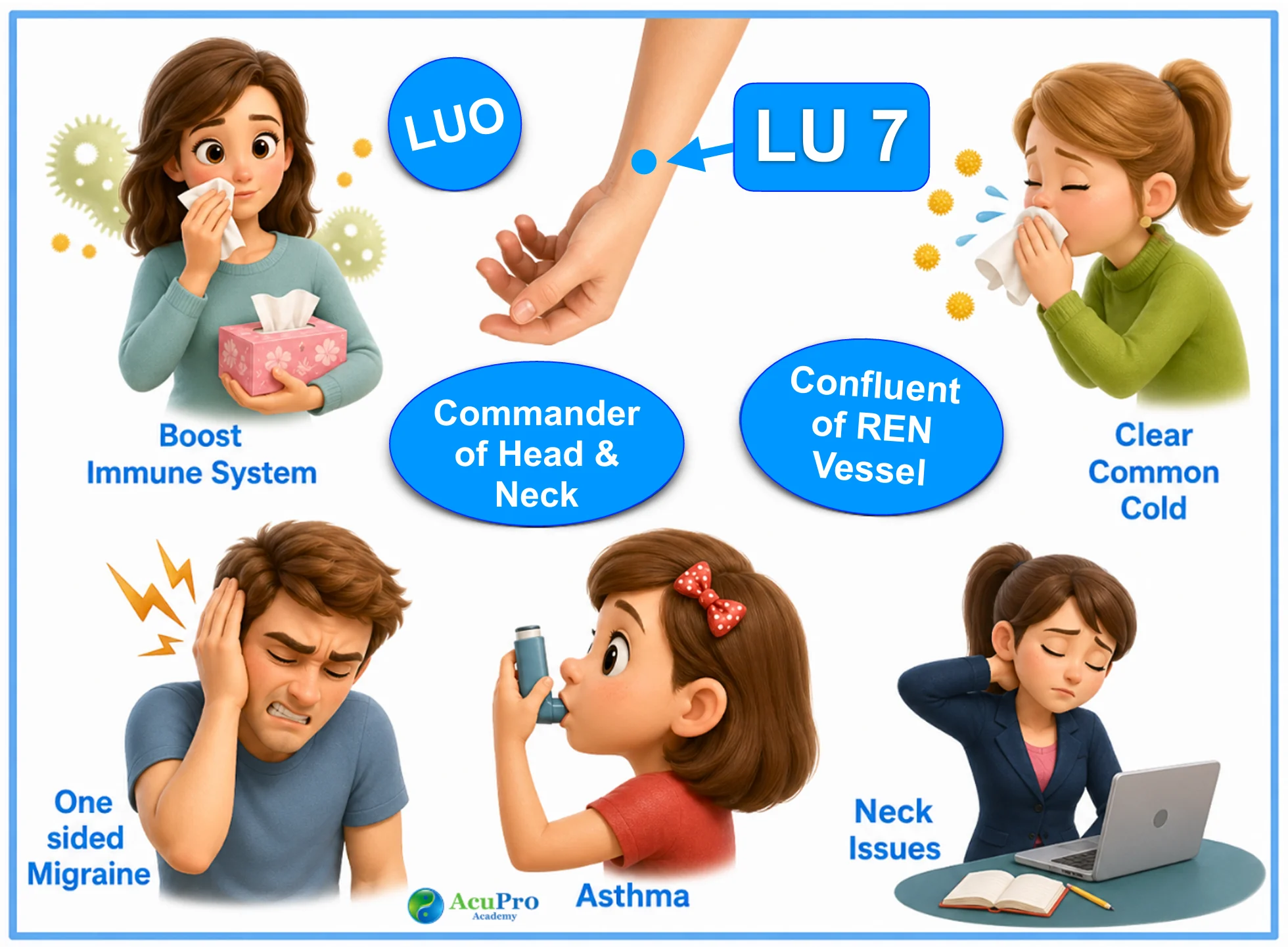
Lung 7 is also the Luo-Connecting point of the Lung channel and an important point for working with the Ren Mai. It can be especially interesting when working with reproductive and hormonal concerns, particularly when paired with Kidney 6.
I also love the combination of Lung 7 and Kidney 27 when emotional well-being is part of the picture.
Another important function of Lung 7 is its relationship with the Wei Qi. It’s a point I often think about when supporting the body’s defensive Qi. This can make it particularly useful when working with recurring colds, flu, and allergies.
Acupoint Lung 7 is one of those points that seems to have a little bit of everything. It’s a great reminder of just how interconnected the channels are and how a distal point can influence areas far beyond where the needle is placed.
Lung 10: The Yin-Spring Point
Moving down the Lung channel, we come to Lung 10, the Ying-Spring point of the Lung channel.
This is another point I love for acute sore throats.
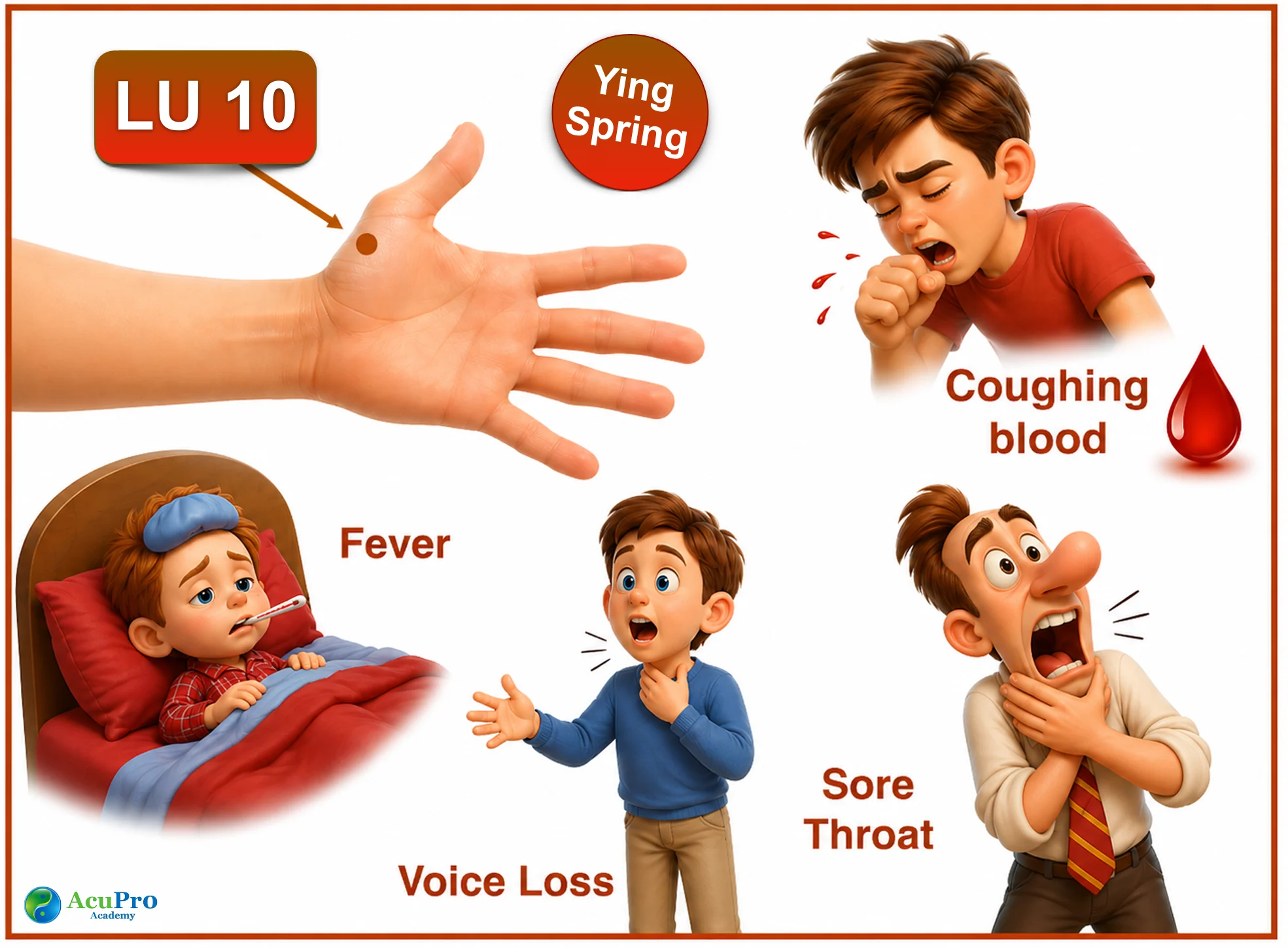
I’ve personally used acupressure on Lung 10 when I feel that familiar scratchiness beginning in my throat. For me, it’s become one of those points I reach for when I feel like something might be coming on.
The Ying-Spring points are traditionally associated with clearing heat. This helps explain why Lung 10 is such a useful point to remember when heat is affecting the Lung channel.
Sometimes, having a few simple acupressure points that you know well can be incredibly empowering. Lung 10 is one of those points that I always like to keep in my mental toolbox.
Lung 11: The Jing-Well Point
Finally, we have Lung 11, the Jing-Well point of the Lung channel.
Acupoint Lung 11 is a fascinating point because of the wide range of situations in which it can be considered. It is traditionally used for conditions involving fainting and fever, and it also has applications for emotional distress.
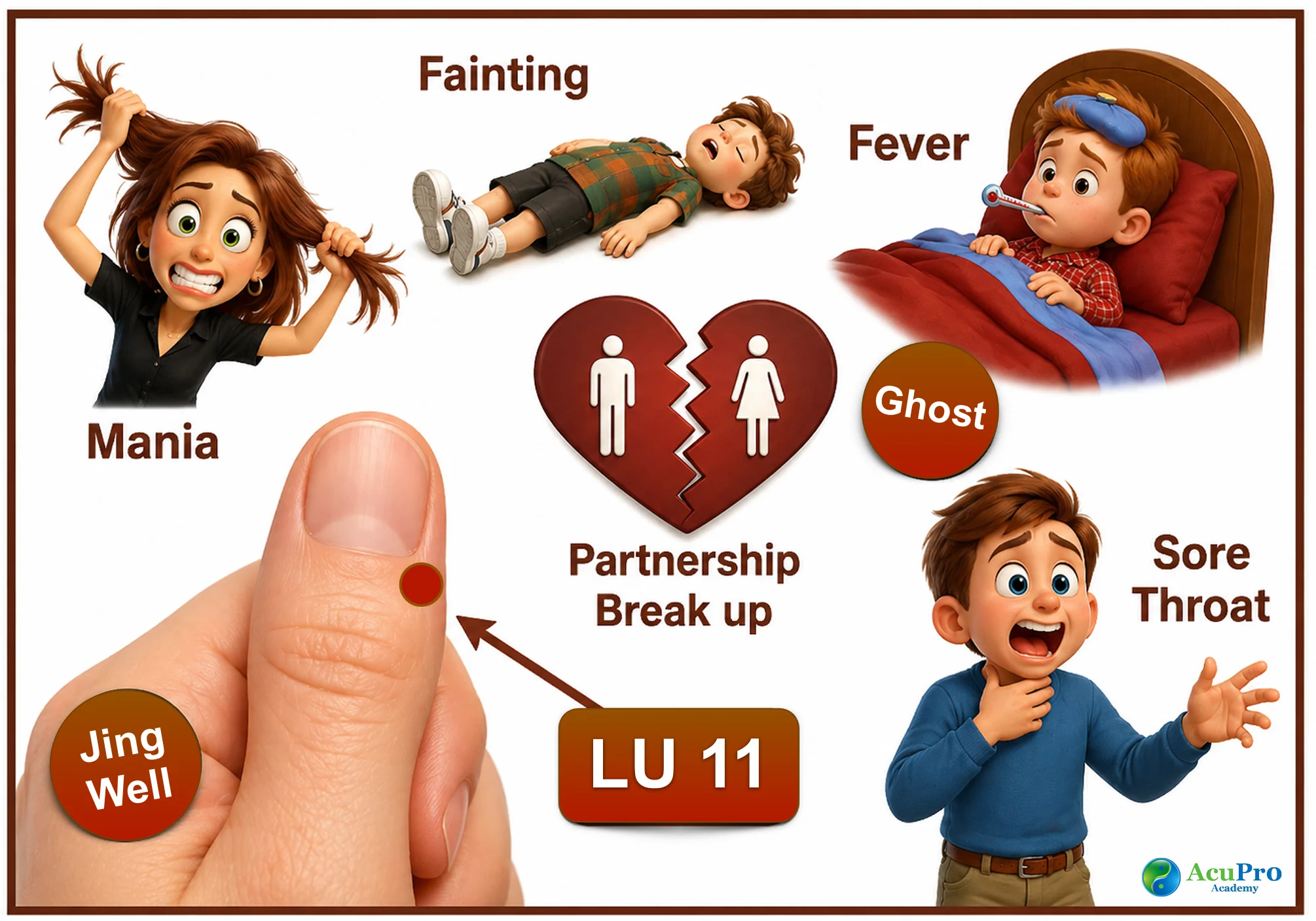
Lung 11 is also considered one of the Ghost Points, which connects to its traditional use in certain emotional and mental disturbances.
One of the more unusual applications associated with this point is emotional distress following significant life changes or relationship breakdowns, such as divorce or the ending of an important partnership.
It’s a fascinating reminder that acupuncture points don’t always fit neatly into one category. A point on the Lung channel can have applications that extend far beyond the respiratory system.
Honorable Mention: Lung 9
Before we move on to our asthma combination, I want to give an honorable mention to Lung 9.
Acupoint Lung 9 is located at the radial side of the wrist crease and is the Yuan-Source and Shu-Stream point of the Lung channel.
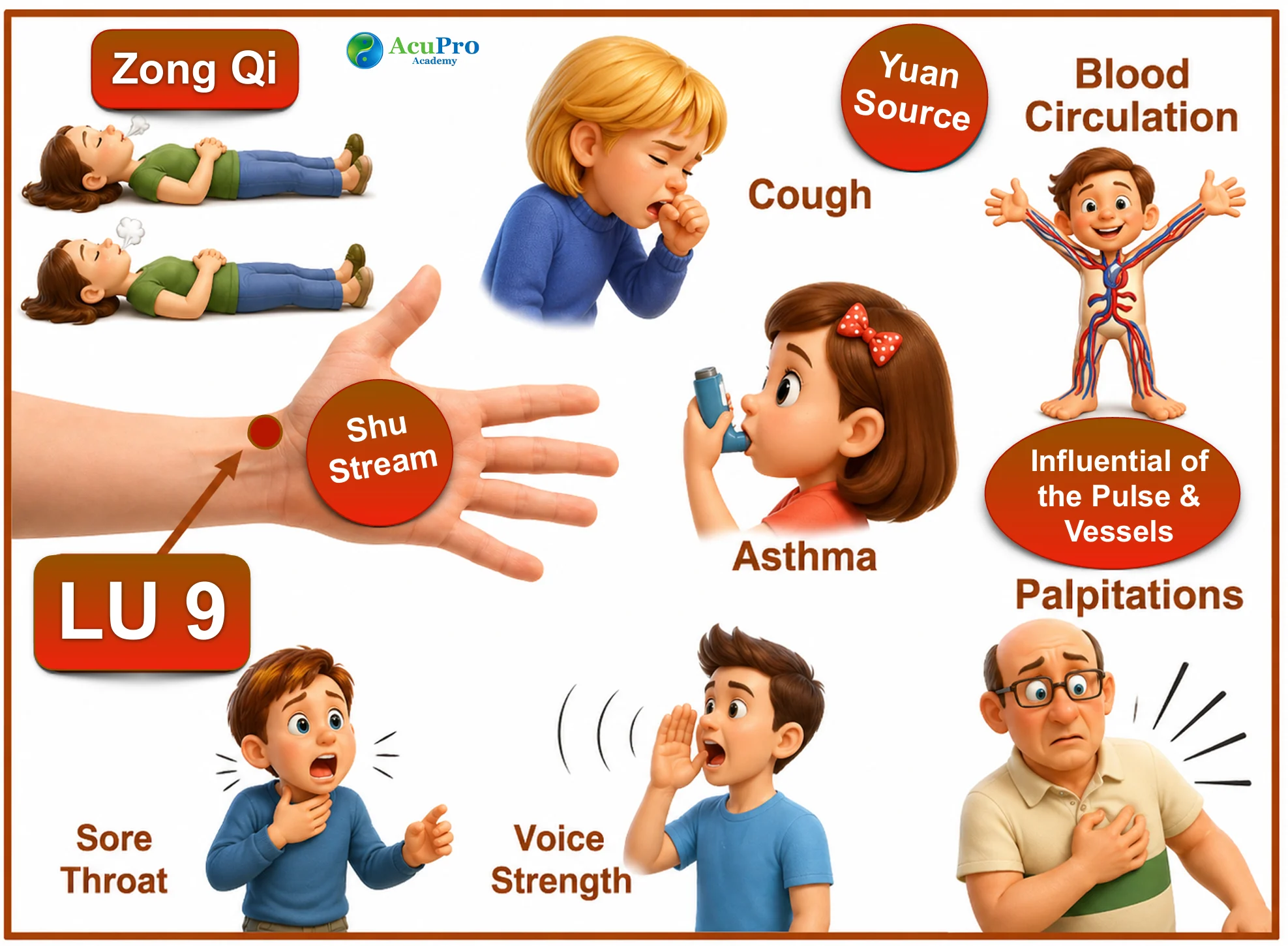
It’s an important point to remember when working with cardiovascular and pulmonary concerns, making it a valuable addition to your clinical toolkit.
I find Lung 9 particularly interesting because of its relationship with the Lung and its broader influence on Qi and Blood. It’s definitely a point that deserves a place on your list of essential Lung channel points.
My Go-To Acupuncture Combination for Chronic Asthma
Now let’s talk about one of my favorite combinations when working with chronic asthma.
One of the great things about this combination is that it can be incorporated into treatment even when you’re still working through the patient’s exact TCM diagnosis.
I would start with Lung 1 or Bladder 13, depending on whether I’m using a front or back treatment approach.
From there, I like to add Stomach 36, which is an important point for supporting the body’s Qi and overall strength.
Next, I would consider the combination of Lung 7 and Kidney 6. This pairing is particularly interesting because of the relationship between the Lung and Kidney and the concept of the Kidney helping the Lung to grasp Qi.
For the chest, Ren 17 can help open the chest and support the Lung’s function, while Ren 22 can provide additional support for respiratory symptoms.
If I’m taking a back-treatment approach, I may also consider the extra point Ding Chuan, along with Bladder 23.
So, to recap, the combination could include:
- Lung 1 or Bladder 13
- Stomach 36
- Lung 7 + Kidney 6
- Ren 17
- Ren 22
- Ding Chuan
- Bladder 23
As always, acupuncture treatment should be individualized based on the patient’s presentation and TCM diagnosis. Chronic asthma is also a serious medical condition that requires appropriate medical management. Acupuncture should be used as a complementary approach rather than a replacement for prescribed treatment.
Bringing It All Together
The Lung channel may be relatively short compared to some of the other meridians, but its 11 points offer us an incredible range of clinical possibilities.
Lung 1 is an essential point to remember for Lung and respiratory disorders as the Front-Mu point of the Lung.
LU 5 is a powerful choice when Lung Heat is part of the picture.
Lung 7 is one of the most versatile points on the channel, with applications ranging from headaches and neck pain to allergies and the Ren Mai.
LU 10 is a go-to for acute sore throats, while Lung 11 offers fascinating applications for fever, fainting, and emotional distress.
And don’t forget Lung 9, our honorable mention, which deserves attention for its important relationship with the Lung, Qi, and cardiovascular and pulmonary concerns.
The more you understand the individual functions of each acupuncture point, the easier it becomes to build a treatment that is specific to the patient sitting in front of you.
As always, keep rocking it using TCM!
Share this article














You are star! I love your entusiasmus 🙂
It is true, Clara is so passionate! ✨
You are the best of the best wIth all presentations!
Thank you a lot!
Thank you for the great feedback, Mila! 💖