TOP 7 AcuPoints of the Bladder Channel
The Bladder channel is the longest acupuncture meridian in the body, with an impressive 67 acupuncture points. That’s a LOT of points to remember!
Whether you’re an acupuncturist or TCM student, you already know how challenging it can be to memorize every acupuncture point, understand its functions, and figure out which ones are most useful in clinical practice.
So today, I’m making your life a little easier!
I’m sharing seven of my favorite Bladder channel acupuncture points, including their TCM functions, clinical applications, and some of my favorite point combinations.
Now, I have to admit something. I cheated a little when narrowing down my list because I simply couldn’t leave out the Back-Shu points. However, you’ll understand why.
And make sure you stick around until the end because I’m also sharing a special acupuncture point combination that I’ve used in my practice for patients with endometriosis.
Ready? Let’s do this!
Clara
TCM Geek
Links mentioned in this video:
💌 Sign up to my FREE newsletter here!
📍 Get your AcuPoints Clinical Shortcuts Guide here!
📍 Back-Shu & Front-Mu AcuPoints video
🎓 Enroll in Dr. Sonia’s Balance System Acupuncture Foundation Online Courses here!
🩵 Curious if Jane is right for your practice? Book a free demo and get a one-month grace period with code ACUPRO1MO!
7 Powerful Bladder Channel Acupuncture Points Every Practitioner Should Know
Understanding the Bladder Channel in Chinese Medicine
The Bladder channel, also known as the Foot Tai Yang Bladder Meridian, is one of the twelve primary acupuncture channels in Chinese Medicine.
With 67 acupuncture points, it travels along the head, back, and posterior aspect of the body before reaching the little toe.
The Bladder channel is particularly important in clinical practice because of its relationship with the back, spine, muscles, and internal organs through the Back-Shu points.
From a TCM perspective, Bladder channel points can be selected to address a wide range of patterns, including:
- Lower back pain and musculoskeletal discomfort
- External Wind-Cold patterns
- Blood Heat and Blood Stasis
- Urinary and reproductive concerns
- Headaches and neck stiffness
- Emotional tension and Shen disturbances
Let’s explore the points I use most often!
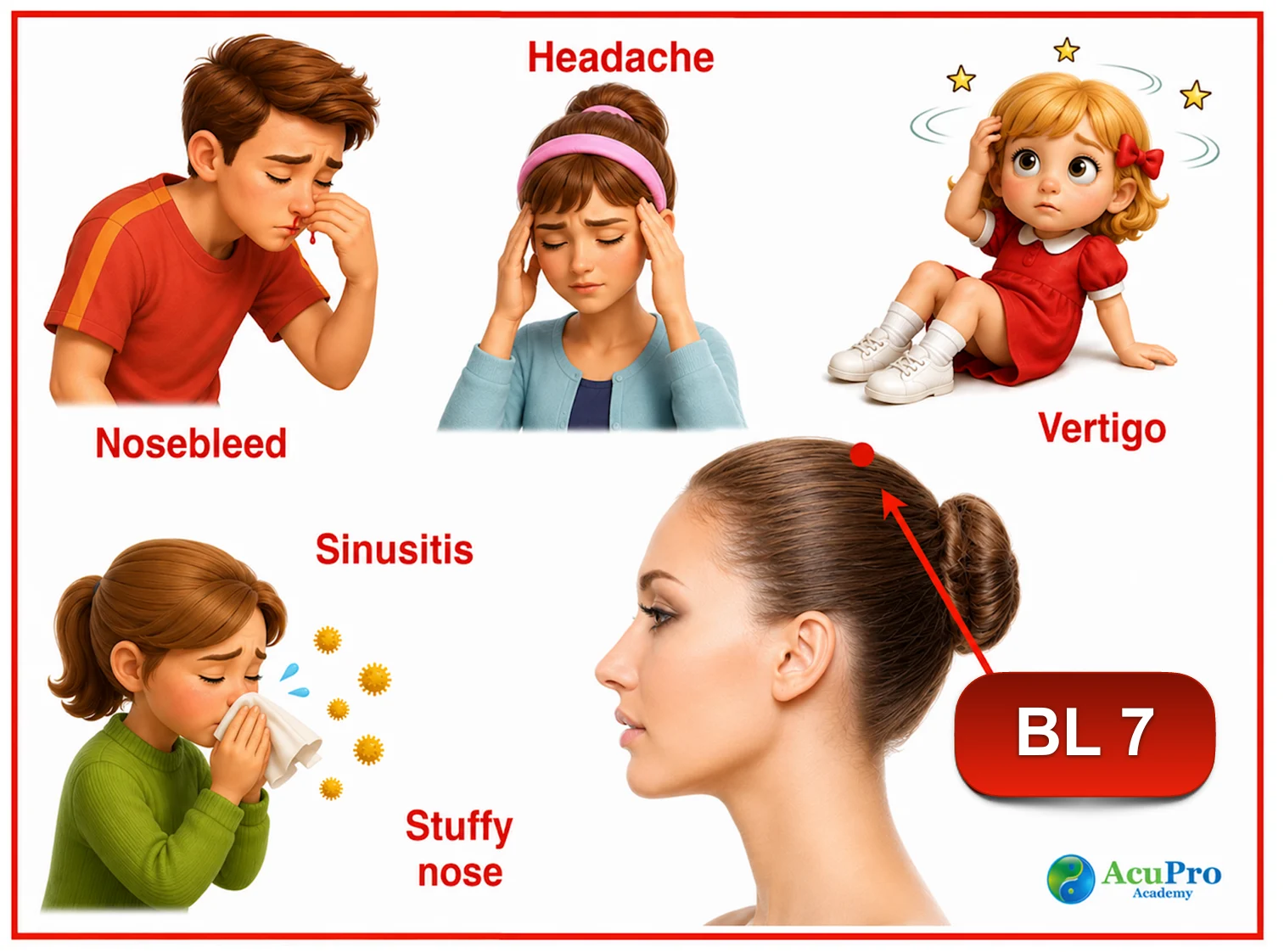
1. BL 17: Influential Point of Blood
Location: 1.5 cun lateral to the posterior midline, at the level of the lower border of the seventh thoracic spinous process.
BL 17 is one of my absolute favorite acupuncture points. Why?
Because it’s the Influential Point of Blood, making it incredibly versatile when working with Blood-related patterns in Chinese medicine.
TCM Functions of BL 17
BL 17 is traditionally used to:
- Clear Blood Heat
- Nourish Blood in deficiency patterns
- Move Blood in cases of Blood Stasis
- Support the movement of Qi in the chest
- Address certain digestive and respiratory patterns
Additionally, what makes this point particularly interesting is that it can be incorporated into treatment strategies for several different Blood patterns.
Whether you’re working with Blood Deficiency, Blood Heat, or Blood Stasis, BL 17 may be an important point to consider depending on your diagnosis.
Clinical Applications
In TCM practice, BL 17 may be selected for patterns involving:
- Blood Deficiency
- Blood Stasis
- Blood Heat
- Cough and asthma
- Hiccups and digestive disturbances
Clinical tip: When you’re treating a Blood-related TCM pattern, remember BL 17!
2. The Back-Shu Points: Supporting the Zang-Fu Organs
Okay, here’s where I cheated!
Instead of choosing just one acupuncture point, I’m including all the Back-Shu points.
I couldn’t possibly leave them out because they’re some of the most useful acupuncture points in Chinese medicine.
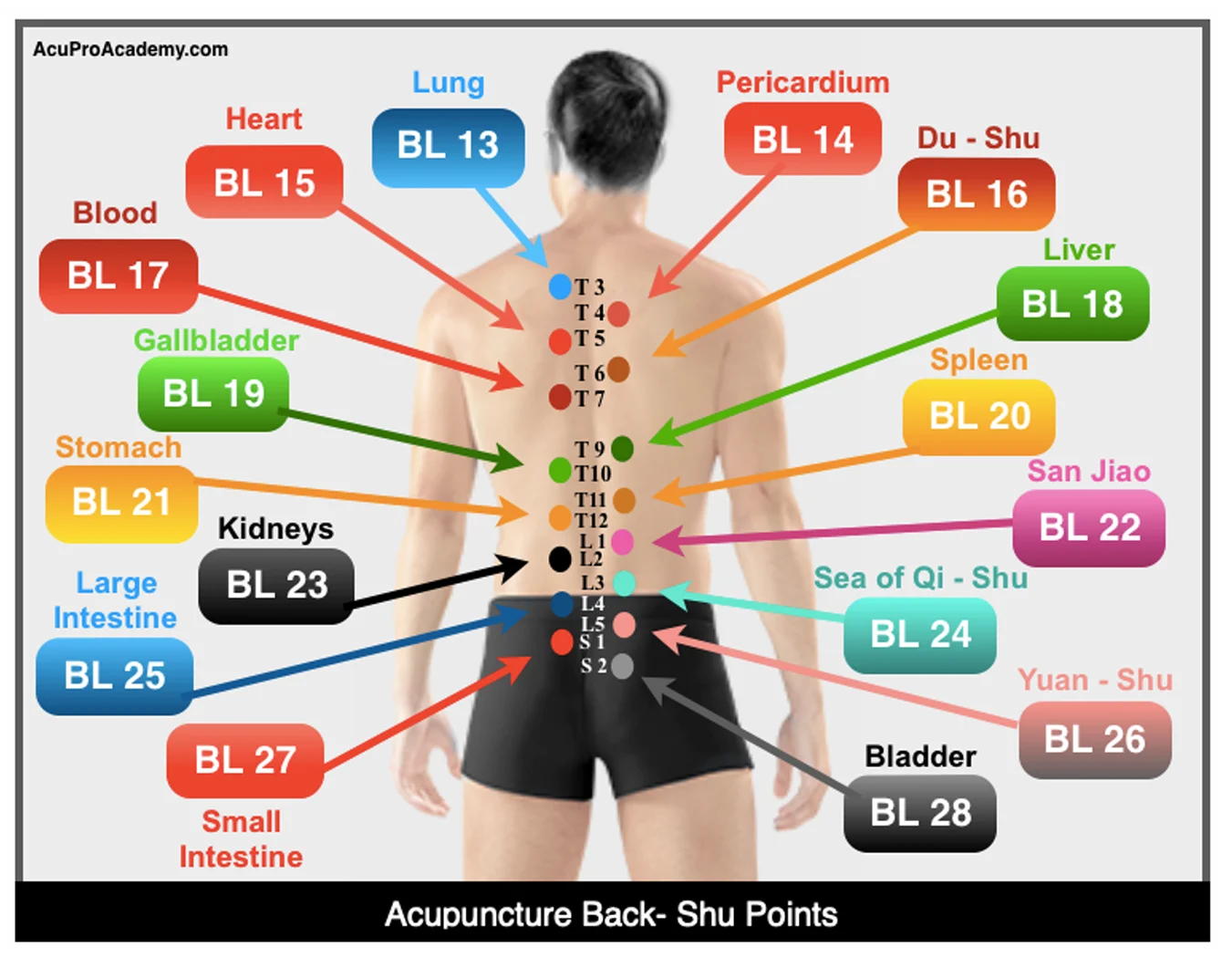
What Are Back-Shu Points?
Back-Shu points are located along the Bladder channel on the back.
In TCM theory, each Back-Shu point has a specific relationship with its corresponding Zang-Fu organ.
Moreover, this makes them especially valuable when developing individualized treatment strategies based on organ patterns.
Examples of Important Back-Shu Points
BL 13 (Fei Shu): Lung Back-Shu Point
Traditionally used for Lung-related patterns, including respiratory concerns.
BL 19 (Dan Shu): Gallbladder Back-Shu Point
Traditionally used for patterns involving the Gallbladder.
The beauty of the Back-Shu points is their versatility.
Depending on your patient’s diagnosis, you can select the appropriate point to support the corresponding TCM organ system.
Clinical tip: Don’t underestimate the Back-Shu points! They are incredibly useful when working with Zang-Fu patterns.
3. BL 40: The Command Point for the Lower Back
Location: At the midpoint of the popliteal crease, behind the knee.
If you treat lower back pain in your acupuncture practice, you NEED to remember BL 40!
As a result, this is one of the most important distal acupuncture points for the back.
BL 40 is traditionally known as the Command Point of the Lower Back.
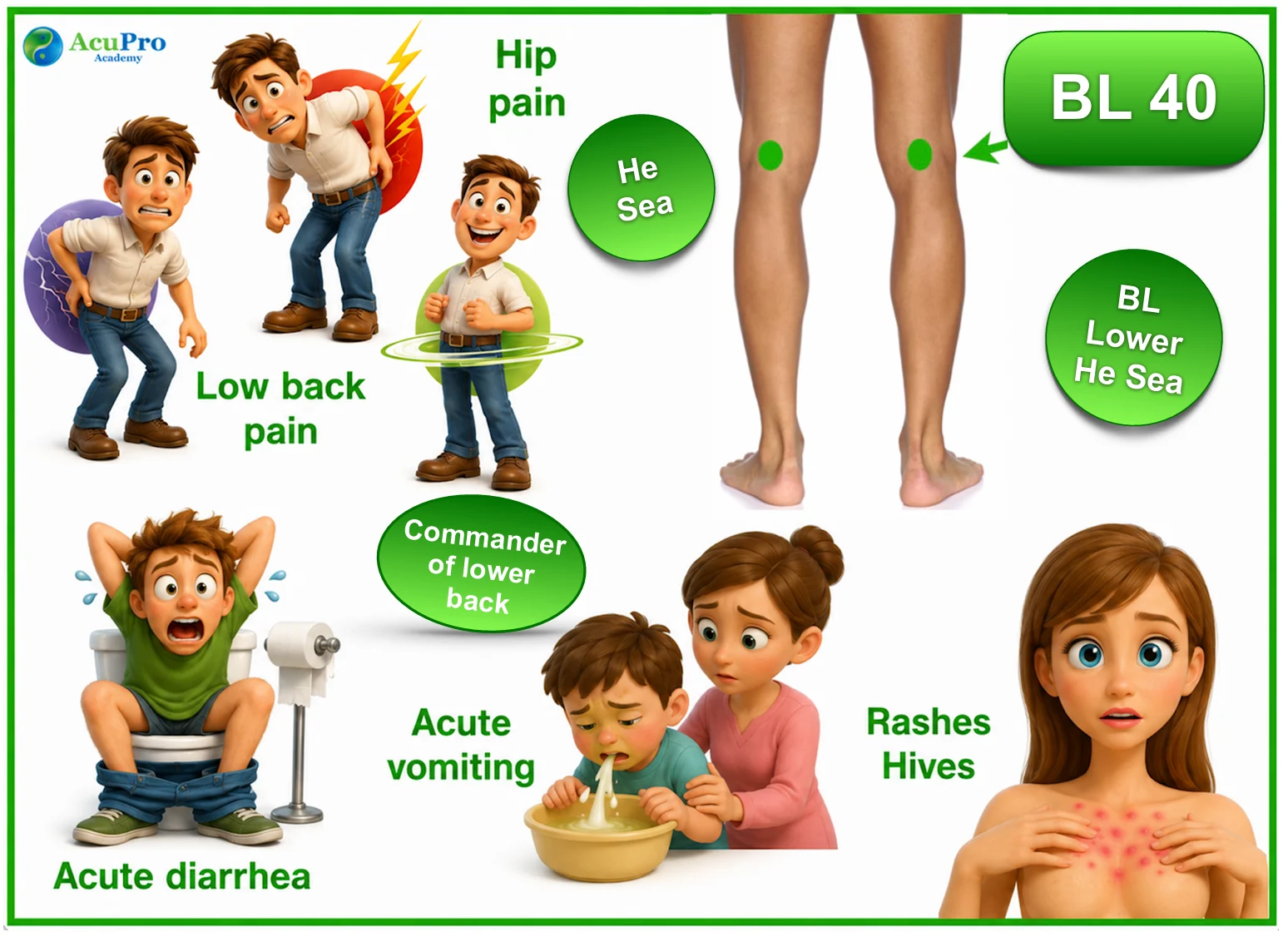
TCM Functions of BL 40
BL 40 is used to:
- Benefit the lower back
- Relax the sinews
- Clear Heat
- Cool the Blood
- Address certain urinary patterns
Clinical Applications
This point is commonly selected in TCM treatment strategies for:
- Lower back pain
- Sacral discomfort
- Hip pain
- Blood Heat patterns affecting the skin
- Certain urinary complaints
I frequently incorporate BL 40 into my lower back pain treatment strategies.
And because it’s a distal point, it can be useful when treating discomfort along the Bladder channel.
Clinical tip: For lower back pain, BL 40 is one of the first points I consider.
4. BL 57: A Powerful Point for Hemorrhoids
Location: On the posterior lower leg, approximately 8 cun below BL 40, between the heads of the gastrocnemius muscle.
BL 57 is another incredibly useful acupuncture point, particularly when treating certain lower-body conditions.
One of its most well-known traditional applications is for hemorrhoids.
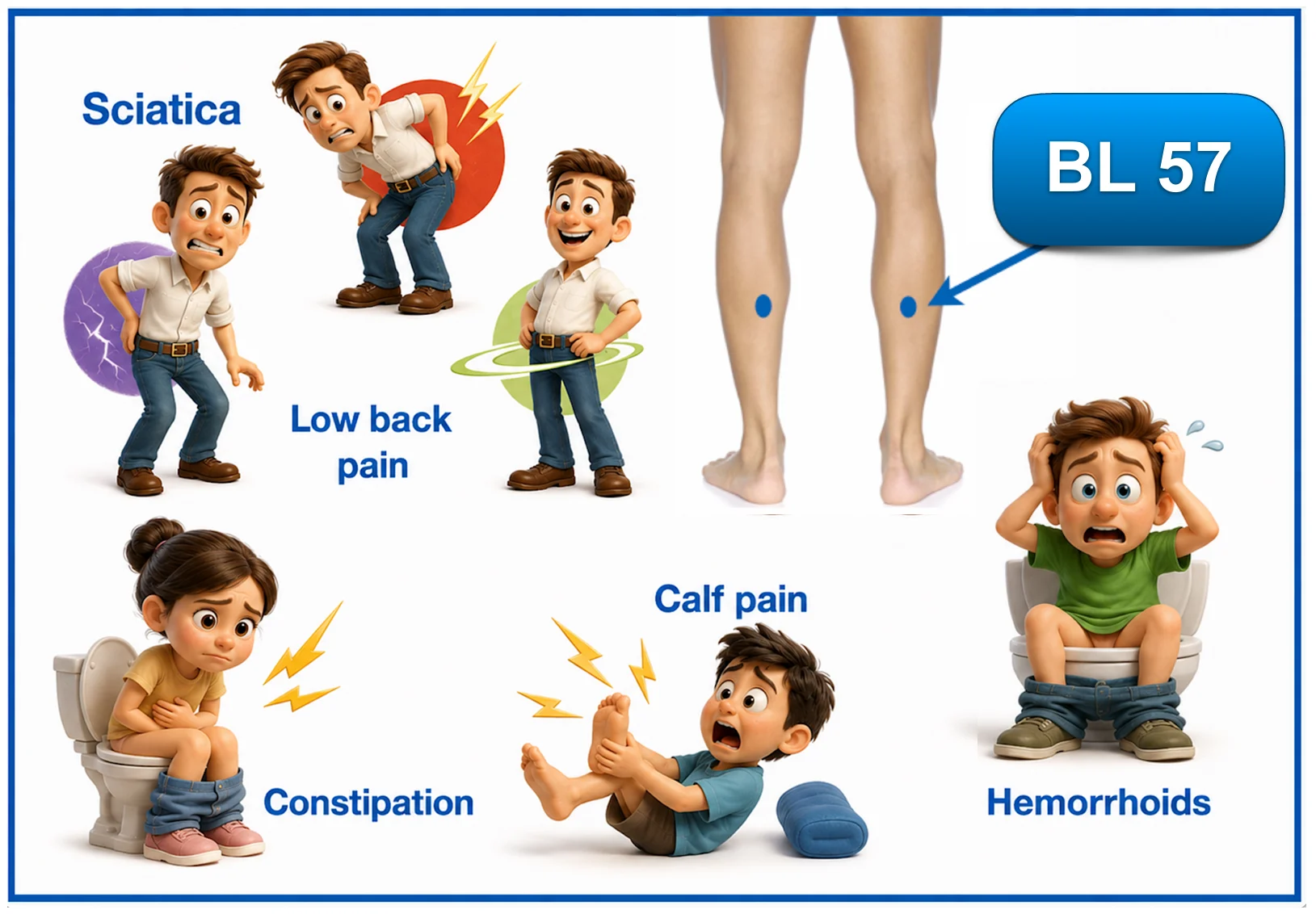
TCM Functions of BL 57
BL 57 is traditionally used to:
- Address hemorrhoids
- Relax the sinews
- Benefit the lower back and legs
- Support the movement of Qi along the channel
Clinical Applications
In TCM practice, BL 57 may be selected for:
- Hemorrhoids
- Sciatica
- Calf pain
- Muscle tightness in the lower leg
In short, this point can be particularly valuable when combined with other acupuncture points based on the patient’s presentation.
Clinical tip: Remember BL 57 when developing a TCM treatment strategy for hemorrhoids!
5. BL 60: Expelling Tai Yang Pathogens
Location: In the depression between the lateral malleolus and the Achilles tendon.
BL 60 is another favorite of mine!
It’s particularly important when working with Tai Yang patterns in Chinese medicine.
It should be noticed, if you’ve studied the Six Stages of Disease, you’ll remember that Tai Yang is associated with the body’s exterior and the initial stages of certain external pathogenic invasions.
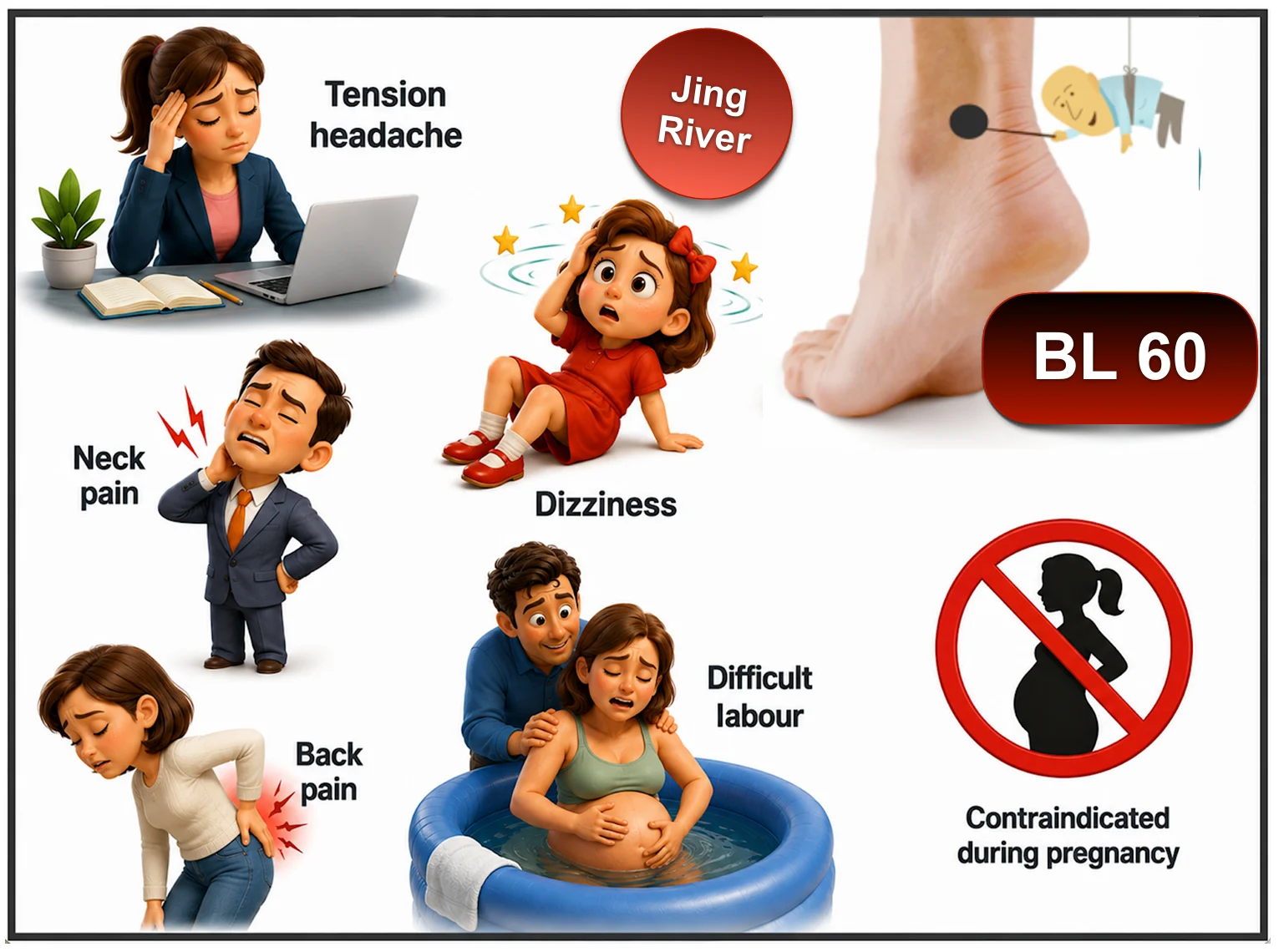
TCM Functions of BL 60
BL 60 is traditionally used to:
- Expel Wind
- Clear Heat
- Relax the sinews
- Benefit the head and neck
- Address pain along the Bladder channel
Clinical Applications
BL 60 may be selected for:
- Occipital headaches
- Neck stiffness
- Back pain
- Tai Yang channel patterns
Important Pregnancy Precaution
BL 60 is traditionally considered contraindicated during pregnancy because of its association with promoting labor.
It should not be used casually during pregnancy, and any obstetric acupuncture treatment requires appropriate training and clinical judgment.
Clinical tip: Think of BL 60 when your patient presents with occipital headaches and a stiff neck associated with a Tai Yang pattern.
6. BL 62: Calming the Mind and Relieving Tension
Location: In the depression directly below the lateral malleolus.
BL 62 is one of my favorite acupuncture points when patients are dealing with tension, headaches, and emotional stress.
It’s also traditionally classified as a Ghost Point.
In classical Chinese medicine, Ghost Points are associated with certain mental and emotional disturbances.
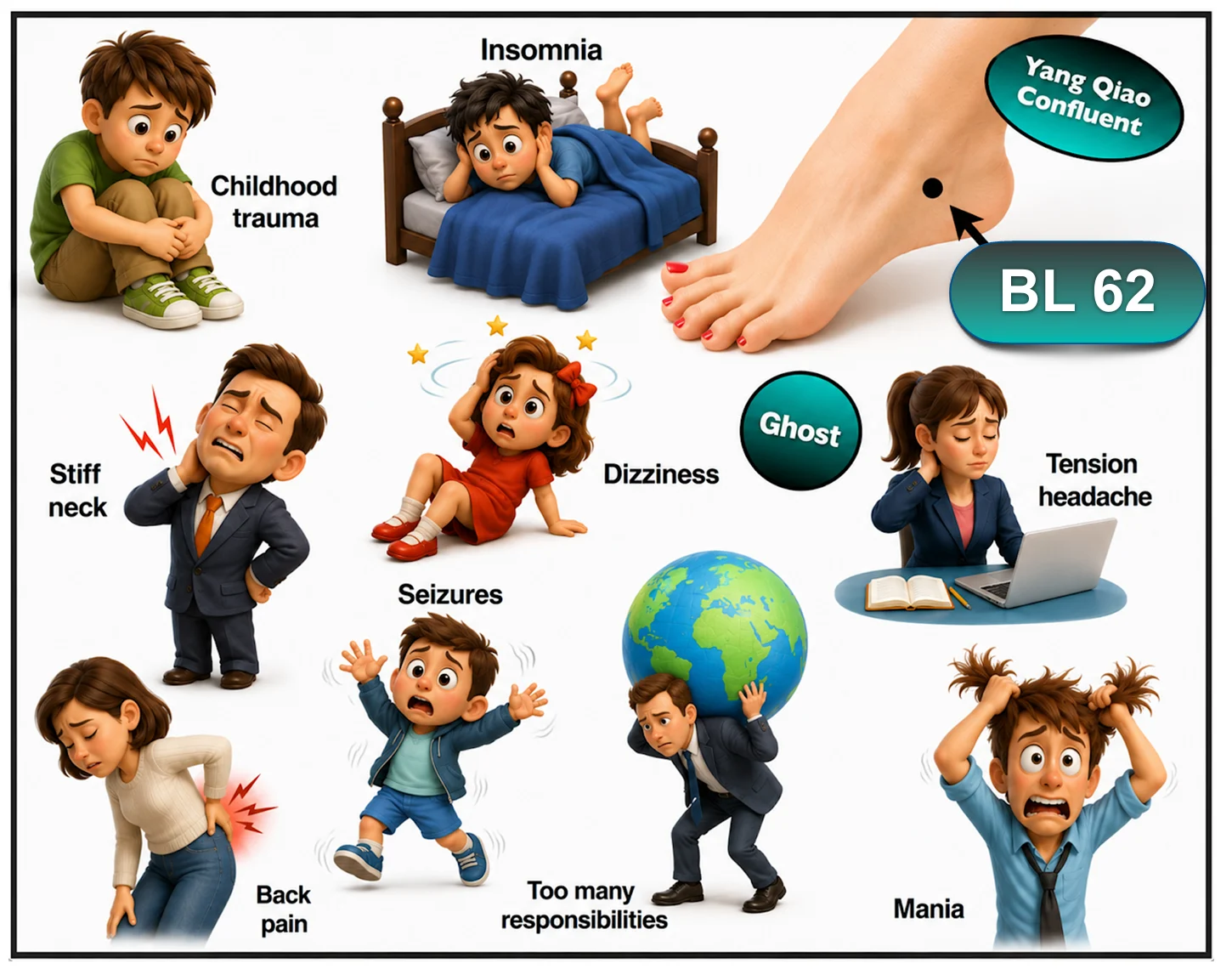
TCM Functions of BL 62
BL 62 is traditionally used to:
- Calm the mind
- Address certain Shen disturbances
- Benefit the head
- Relax the sinews
- Address pain along the channel
Clinical Applications
This point may be considered for:
- Headaches
- Neck and shoulder tension
- Certain sleep disturbances
- Emotional tension
- Shen-related patterns
You know those patients who feel like they’re carrying the weight of the world on their shoulders?
BL 62 is one of the points I like to consider when their TCM diagnosis supports its use.
Clinical tip: Remember BL 62 when treating tension and Shen-related patterns.
7. BL 67: An Important Point in Obstetric Acupuncture
Location: On the lateral side of the little toe, near the corner of the nail.
Moreover, BL 67 is probably best known for its traditional use in obstetric acupuncture.
One of its most discussed applications is moxibustion for breech presentation.
TCM Functions of BL 67
BL 67 is traditionally used to:
- Address certain pregnancy-related concerns
- Promote labor in specific traditional treatment contexts
- Clear Heat
- Address channel-related symptoms
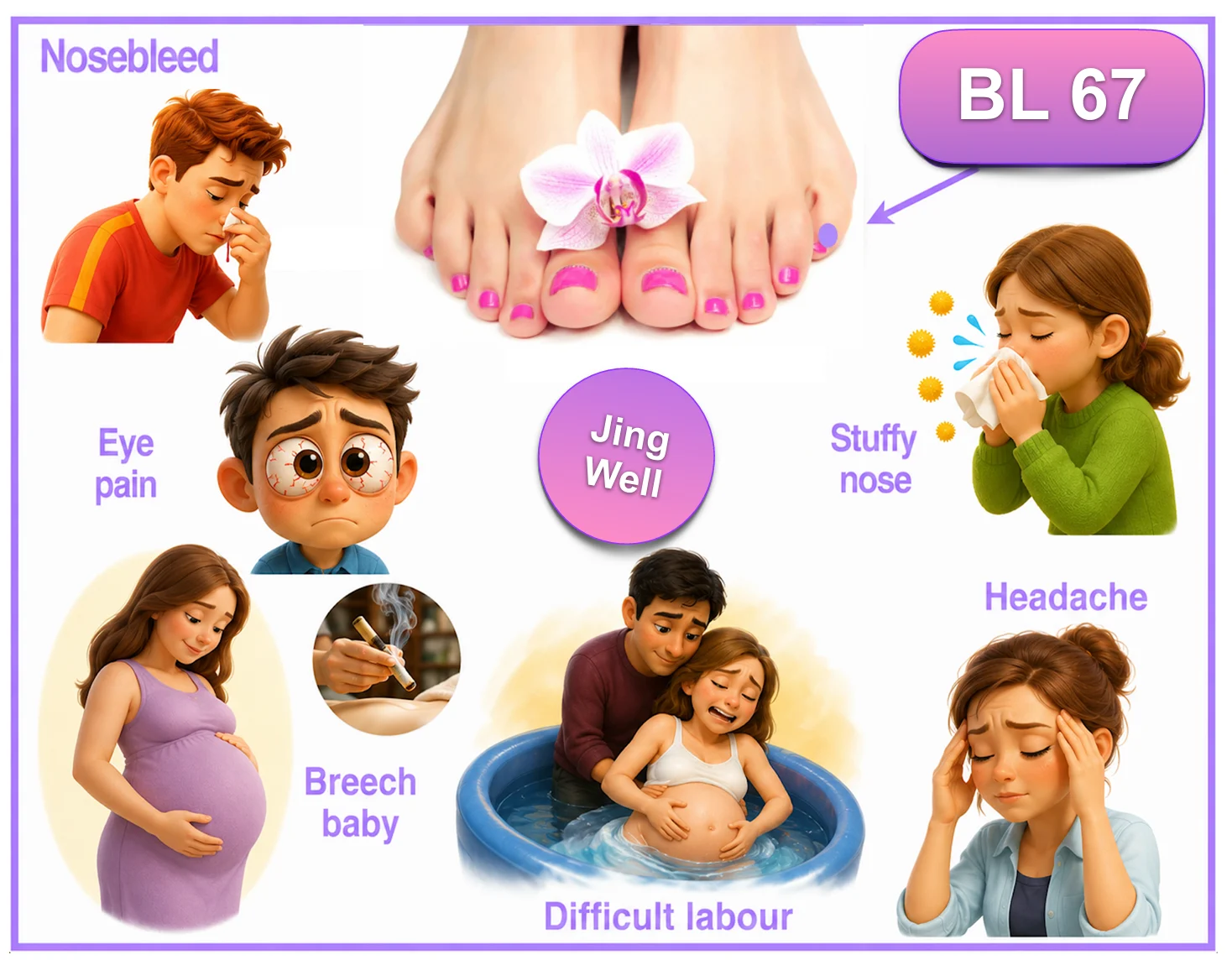
BL 67 and Breech Presentation
In some traditional Chinese medicine practices, moxibustion at BL 67 is used in an attempt to encourage a breech baby to turn.
However, evidence for its effectiveness is mixed, and it should not replace standard obstetric assessment or management.
Pregnant patients should consult their maternity care provider before considering moxibustion or acupuncture for breech presentation.
Clinical tip: BL 67 is an important point to know when studying obstetric acupuncture, but pregnancy-related treatments require specialized training and appropriate medical coordination.
Bonus: My Favorite Bladder Channel Combination for Endometriosis
As promised, I want to share a treatment approach I’ve used in my clinical practice for patients with endometriosis.
The points are:
BL 31, BL 32, BL 33, and BL 34
These points are located in the sacral region and are collectively known as the Baliao points.
The Ba Liao Points and Gynecological Conditions
In TCM, the Ba Liao points are traditionally used for a variety of pelvic and gynecological concerns.
Their traditional applications include:
- Menstrual irregularities
- Pelvic discomfort
- Excessive vaginal discharge
- Certain reproductive patterns
My Clinical Approach
Lastly, in my practice, I’ve used gentle plum blossom or seven-star needle stimulation over the sacral region around BL 31 through BL 34.
I’ve found this approach helpful in some patients presenting with stage one endometriosis.
However, this reflects my clinical experience rather than established evidence that the technique treats endometriosis or its underlying lesions.
Endometriosis requires appropriate medical evaluation and management. Any acupuncture or plum blossom treatment should be considered supportive care and performed only by a qualified practitioner with the appropriate training.
Clinical tip: The Baliao points are worth studying when exploring traditional acupuncture approaches to pelvic and gynecological patterns.
Final Thoughts
Altogether, with 67 acupuncture points, the Bladder channel offers so many possibilities in clinical practice!
But you don’t need to memorize every single point overnight.
Start by becoming familiar with the most clinically useful points, understanding their functions, and learning how to select them based on your patient’s TCM diagnosis.
Here’s a quick recap of my favorites:
- BL 17: Influential Point of Blood
- Back-Shu Points: Support the corresponding Zang-Fu organ systems
- BL 40: Command Point for the lower back
- BL 57: Traditionally used for hemorrhoids and lower-leg concerns
- BL 60: Tai Yang patterns, occipital headaches, and neck stiffness
- BL 62: Tension, headaches, and Shen-related patterns
- BL 67: Traditionally used in obstetric acupuncture
Finally, don’t forget the Baliao points: BL 31 through BL 34, when studying traditional approaches to gynecological conditions.
If you enjoyed learning about these acupuncture points, make sure to explore my acupuncture meridian playlist, where I break down the most useful points on the different channels.
My goal is always to make Chinese medicine easier, more practical, and more fun to learn!
Keep studying, keep practicing, and keep rocking it with TCM!
Share this article

Written by : AcuPro Academy (Clara)
Related Posts





Latest articles
November 18, 2026
November 18, 2026