Electroacupuncture For Shoulder Issue (E-Stim)
Do you ever feel unsure when incorporating electrostimulation into your treatments?
You’re definitely not alone.
For many of us, e-stim wasn’t something we got a lot of hands-on practice with in school. Maybe you saw it once or twice, maybe you understood the theory, but when it comes to actually using it confidently in clinic? That’s where the gap shows up.
And the truth is, electroacupuncture can be a total game-changer when you know how to use it properly.
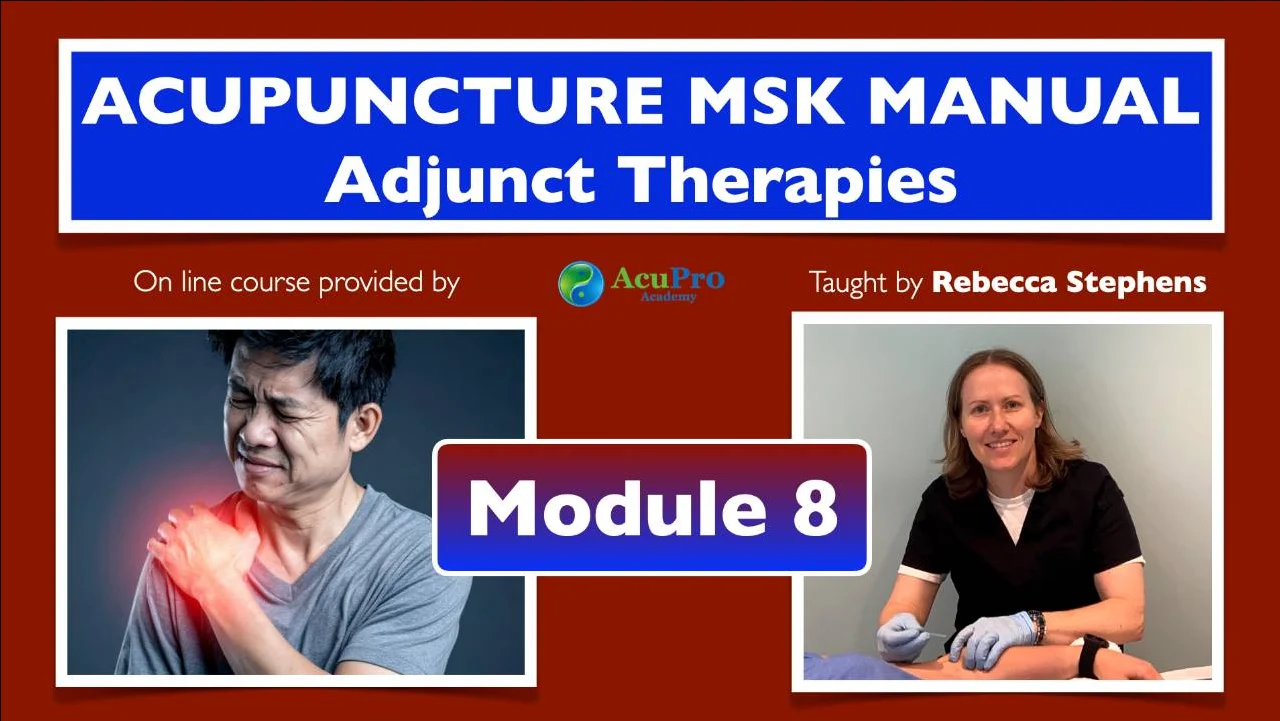
Today, I’m excited to share a peek inside Module 8 from Dr. Rebecca Stephens’ Acupuncture Musculoskeletal Manual Part 3 (Chest, Shoulder & Upper Arm) Online Course. This module focuses on electroacupuncture for shoulder pain, and it’s packed with the kind of clear, practical instruction we should have learned in school, but often didn’t.
So grab a notebook, because we’re diving into real clinical applications you can start using right away.
And no matter what, keep rocking it using TCM!
Clara
TCM Geek
 Enroll in the full online course, here!
Electroacupuncture For Shoulder Issue (E-Stim)
Why Use Electroacupuncture for Shoulder Pain?
Electroacupuncture (e-stim) enhances traditional needling by adding electrical stimulation between needles.
This does a few powerful things:
- Improves communication between the muscle and nervous system
- Increases circulation to the area
- Reduces pain and inflammation
- Activates motor points more effectively
When it comes to shoulder injuries, especially chronic or stubborn cases, this added stimulation can make a huge difference in patient outcomes.
Electroacupuncture for the Rotator Cuff (Supraspinatus)
Let’s start with one of the most common culprits in shoulder pain: the supraspinatus.
Technique Overview:
- Place one pair of needles at the motor point (around Small Intestine 12)
- Place a second pair near the insertion point (greater tubercle of the humerus)
- Connect the leads between the two pairs
The motor point is key here. It’s often the most reliable trigger point location and gives you the strongest response.
Settings:
- Frequency: 4–6 Hz
- Duration: ~10 minutes
This setup helps activate the muscle, improve signaling with the central nervous system, and boost local circulation.
Treating the AC Joint & Shoulder Impingement
For patients with AC joint dysfunction or impingement, a more targeted joint approach works beautifully.
Technique:
- Use small, shallow needles (15 mm) at the AC joint
- Apply a gentle bone-pecking style technique
- Add points at the SC joint for full joint support
To access the subacromial space:
- Insert needles near San Jiao 14 (under the acromion)
- Needle perpendicularly (approx. 1–1.5 inches depending on anatomy)
Tip:
Patients may feel a deep ache here. This is normal, but always ensure comfort.
Settings:
- Slightly higher frequency can help reduce inflammation
Accessing the Glenohumeral Joint
This is a great technique when working with deeper joint dysfunction.
Point:
- Small Intestine 10 (in the depression below the scapular spine)
Technique:
- Advance the needle gently to contact bone
- Apply electrostimulation across paired needles
Settings:
- Use a slightly faster frequency
- Gradually increase intensity until the patient feels a strong but comfortable sensation
This helps stimulate deeper structures and improve joint mobility.
Electroacupuncture for the Biceps Long Head Tendon
Biceps tendon issues are incredibly common—and often overlooked.
Technique:
- Place one pair at the motor point of the biceps long head
- Place another pair along the bicipital groove
- (near the transverse humeral ligament or most tender point)
Settings:
- Frequency: 4–6 Hz
This setup helps reduce inflammation, improve tendon healing, and decrease pain.
Clinical Tips for Using Electroacupuncture
If you’re newer to e-stim, here are a few things to keep in mind:
✔ Always start low and increase intensity gradually
✔ Communicate with your patient throughout treatment
✔ Use palpation to guide your point selection
✔ Think in terms of motor point → insertion → pathway
✔ Keep treatments simple before layering complexity
Confidence comes with repetition—and once you start using electroacupuncture regularly, it becomes second nature.
Why This Training Matters
This is exactly why I love Dr. Rebecca Stephens’ teaching style.
It’s practical. It’s clear. And it fills in the gaps that so many of us experienced during school.
These close-up demonstrations show you not just what to do, but how to do it confidently in real clinical situations.
Final Thoughts
Electroacupuncture doesn’t have to feel intimidating.
With the right approach, it becomes one of the most effective tools you have for treating musculoskeletal pain—especially in complex areas like the shoulder.
If you found this helpful and want to go deeper into techniques like trigger point release, bone pecking, and full muscle protocols…you can go deeper.
💡 This is just part of one module from the full course.
Inside Part 3 (Shoulder, Chest & Upper Arm), you’ll learn:
✔️ Step-by-step MSK assessment (posture, ROM, palpation)
✔️ Trigger point release + bone pecking techniques
✔️ Clear understanding of shoulder anatomy
✔️ Close-up needling demos you can follow easily
✔️ How to combine TCM + MSK for better results
👉 Plus 6 CEUs + lifetime access
🔥 Limited-time offer
⏳ Offer ends May 26
👉 Enroll here!
No matter what, keep rocking it with TCM 💜
Share this article