#143 – What is Bioresonance and Why Should Acupuncturists Care? with Grace Kalakay (Podcast)
Listen on Apple Podcasts Listen on Spotify Listen on YouTube Listen on Amazon Music
🔗 Links mentioned in this episode:
📗 Get your copy of Chinese Medicine Made Easy Book or PDF!
🤝 Connect with Grace Website | YouTube | Instagram | Facebook | Grace’s Instagram
🩵 Curious if Jane is right for your practice? Book a free demo and get a one-month grace period with code ACUPRO1MO!
☯️ More AcuPro Episodes you’ll love:
The Link Between Chinese Medicine and Quantum Biology with Dr. Catherine Clinton
Balancing Yin and Yang & Unlocking Feminine Energy with Dr. Irene Sanchez-Celis
The Power of Qi Gong with Britta Stalling (Podcast)
Exploring the Potential of Bioresonance with Grace Kalakay
When you’re working in clinical practice, some of the most challenging patients are often the ones who have already tried everything.
They’ve seen multiple practitioners. They’ve had tests done. Tried different treatments. And yet, they’re still experiencing symptoms without a clear explanation for what’s going on.
That’s exactly where today’s conversation gets interesting.
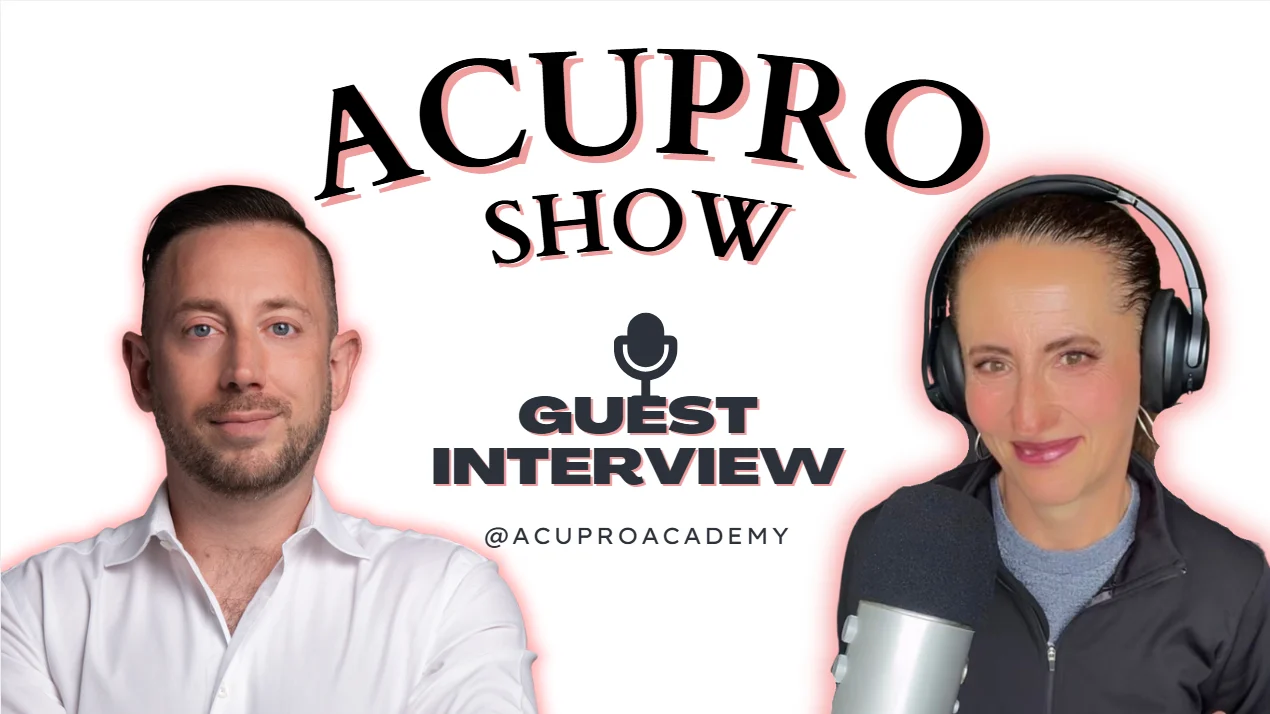
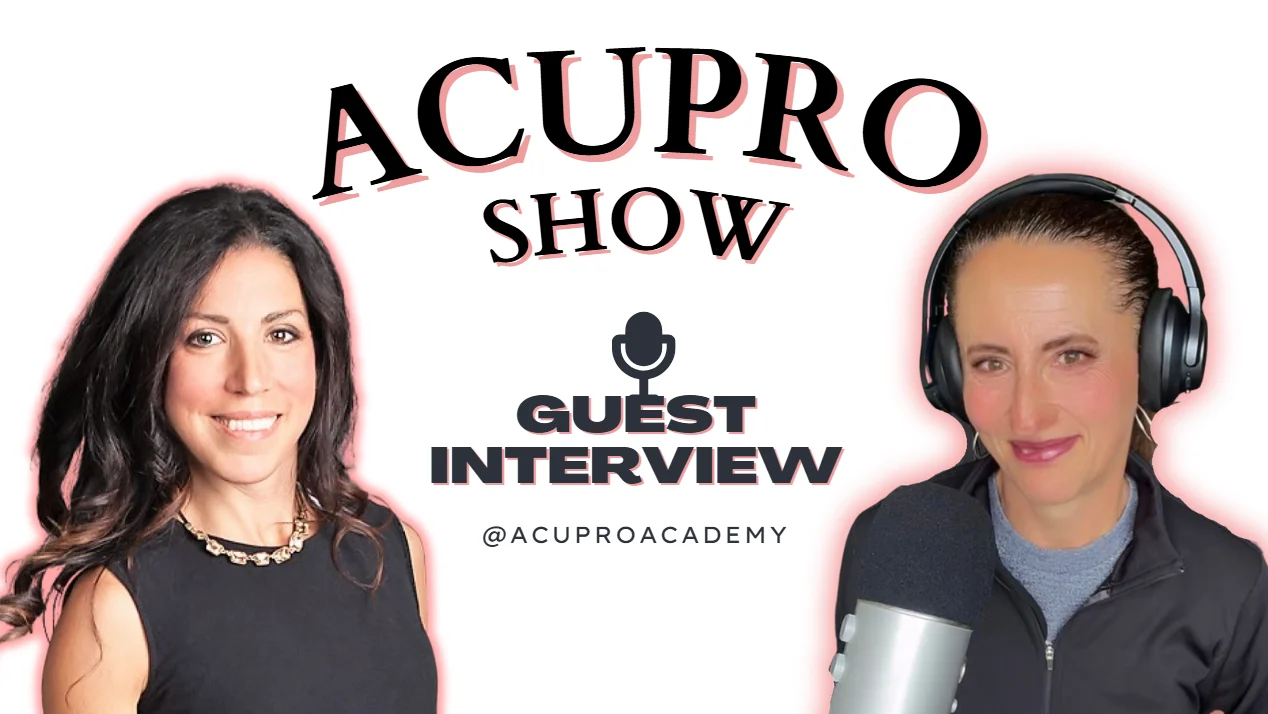
In this episode of the AcuPro Show, I had the pleasure of speaking with Grace Kalakay, an acupuncturist from Maryland who has incorporated Bioresonance technology into her practice.
Grace’s journey with Bioresonance began with a personal experience with the technology many years ago. After seeing increasing numbers of patients with chronic and unexplained symptoms, she eventually decided to bring Bioresonance into her own practice.
In our conversation, she explained how she uses the technology, what she believes it can reveal, and why she considers it another potential tool for practitioners working with complex cases.
What Is Bioresonance?
Bioresonance is presented as a technology that uses specific frequencies, measured in Hertz, to assess the body.
According to Grace, the technology looks for what she describes as vibrational anomalies or areas of stress that may be associated with different imbalances.
One of the reasons Grace finds it interesting is its potential application in cases where conventional testing hasn’t provided an obvious explanation for a patient’s symptoms.
For practitioners, this raises an interesting question:
Could there be additional information we aren’t seeing through conventional assessment alone?
That’s the question Grace has been exploring through her work.
Why Grace Began Using Bioresonance
Grace is an acupuncturist based in Maryland, and her introduction to Bioresonance wasn’t simply theoretical.
She had actually encountered a German-made Bioresonance machine approximately two decades ago and had a personal experience with it.
Years later, following the COVID-19 pandemic and the growing number of people experiencing persistent symptoms after infection, she began thinking about the technology again.
In 2021, Grace decided to bring Bioresonance into her own clinical practice.
For her, it became another tool to explore particularly complicated cases, especially patients who had already tried numerous approaches without finding satisfactory answers.
The Challenge of Chronic and Unexplained Symptoms
Anyone working in healthcare knows that chronic cases can be incredibly complex.
Sometimes a patient arrives with a long list of symptoms but no clear explanation for why they’re occurring.
They may have already:
- Seen multiple healthcare professionals
- Had conventional testing
- Tried different treatments
- Changed their diet
- Taken supplements
- Explored alternative therapies
And they’re still searching for answers.
Grace believes Bioresonance may offer another perspective in these situations.
During our conversation, she discussed her experience using the technology to look for potential signs of stress or imbalance that she believes may relate to things such as bacteria or viruses.
She specifically discussed organisms including Helicobacter pylori (H. pylori) and E. coli.
It’s important to distinguish this from conventional diagnostic testing: a Bioresonance scan should not be assumed to establish an infection or replace validated laboratory testing.
Can Bioresonance Detect Dormant Pathogens?
One of the more fascinating claims we discussed was the idea that Bioresonance may identify what Grace describes as dormant bacteria or viruses.
The concept is particularly interesting when thinking about chronic health complaints.
Grace explained that some patients may have symptoms that don’t appear to have an obvious cause through standard testing. In her clinical experience, she believes Bioresonance can sometimes provide clues that lead practitioners to investigate other possibilities.
This is an area where it’s especially important to maintain an open but critical mindset.
As practitioners, we can be curious about emerging or alternative technologies while still recognizing the difference between a clinical observation and a validated diagnostic test.
That’s an important distinction when working with patients.
My Own Bioresonance Experience
Grace was kind enough to send me a Bioresonance testing kit so that I could experience the process myself.
The process was surprisingly simple.
I provided a few strands of hair, which were then used for the analysis.
When I received my results, the report suggested temporarily avoiding certain foods, including almonds and ginger.
For me, that was definitely a challenge!
Ginger is something I use regularly, so let’s just say I wasn’t thrilled about that recommendation.
But what I found particularly interesting was that the report also identified what it described as potential areas of imbalance involving my stomach and gallbladder.
It also indicated organisms including E. coli and H. pylori.
Again, these findings were part of the Bioresonance report and should not be confused with laboratory-confirmed diagnoses.
Frequency-Based Information and Structured Water
Another fascinating part of my experience was what Grace included with the report.
She provided a small vial of mineral water that had been structured with frequencies intended to counteract the imbalances identified in the scan.
This is one of the aspects of Bioresonance that I found particularly intriguing.
The concept goes beyond simply identifying potential areas of concern and instead attempts to use frequency-based approaches as part of the therapeutic process.
Whether or not this approach works for a particular individual is something that requires careful consideration and appropriate evidence.
But it certainly made for an interesting conversation about how practitioners are exploring different technologies alongside more traditional approaches.
Bioresonance and Complex Chronic Cases
Grace’s clinical work has led her to use Bioresonance with people experiencing a wide variety of chronic complaints.
She particularly discussed patients with complicated, unexplained symptoms and conditions such as fibromyalgia.
Her perspective is that some of these patients may have underlying factors that haven’t been identified through their previous testing.
For patients who have been searching for answers for years, simply having another practitioner willing to listen and investigate can be incredibly meaningful.
At the same time, complex chronic symptoms deserve careful, evidence-based medical assessment. Bioresonance should be viewed, at most, as a complementary approach rather than a replacement for appropriate medical care.
A Patient Story That Stayed With Me
One of the stories Grace shared really stayed with me.
She told me about a young patient named Maddie who had been experiencing significant symptoms and had seen multiple specialists.
At one point, Maddie had even been told that her symptoms were “all in her head.”
After exploring Bioresonance with Grace, she eventually experienced improvement and was able to return to a much fuller and happier life.
Stories like this are powerful because they remind us of the importance of listening to our patients.
Regardless of which particular treatment approach we use, patients deserve to feel heard, respected, and supported. Especially when they don’t yet have an explanation for what they’re experiencing.
What Can TCM Practitioners Learn From This?
For me, the biggest takeaway from this conversation isn’t necessarily that every practitioner should start using Bioresonance.
It’s about remaining curious.
Chinese medicine has always encouraged us to look at the body from different perspectives and to consider the whole person rather than focusing on one isolated symptom.
That doesn’t mean we should accept every new technology without questioning it.
Quite the opposite.
As practitioners, we can ask:
- What is this technology actually measuring?
- What evidence supports it?
- Does it have limitations?
- Could it complement conventional assessment?
- When should a patient be referred for additional medical testing?
- How can we make sure we’re not giving patients a false sense of certainty?
Those are important questions whenever we introduce a new tool into clinical practice.
The Importance of Keeping an Open Mind
One thing I love about Chinese medicine is that it encourages us to stay curious.
We’re constantly learning.
We’re constantly seeing patients who don’t fit neatly into a textbook diagnosis.
And we’re constantly discovering new ways of understanding the human body.
Bioresonance is certainly an interesting example of a technology that some practitioners are exploring.
It may not be the answer for everyone, and more research is needed to determine what it can and cannot reliably tell us.
But conversations like this allow us to learn about different perspectives and consider how practitioners are approaching some of the most challenging cases in clinical practice.
Final Thoughts
My conversation with Grace Kalakay opened up a fascinating discussion about chronic illness, unexplained symptoms, frequency-based technologies, and the importance of looking at patients from different perspectives.
Whether Bioresonance is something you eventually explore in your own practice or simply something you want to learn more about, I think the most important takeaway is this:
Stay curious, stay critical, and never stop learning.
And above all, remember that our patients are more than their symptoms or test results.
Sometimes the most important thing we can do as practitioners is listen, remain open to possibilities, and continue searching for ways to support the people sitting on our treatment tables.
Disclaimer
The AcuPro Show podcast and material shared through AcuPro Academy, which is a subdivision of Natural Health Sense Incorporated. Designed solely for educational and entertainment purposes. The utilization of information from this podcast or any associated material is at the user’s discretion and risk. This content is not meant to replace the guidance of an acupuncturist. Nor a Chinese medicine doctor, medical doctor, physician, or any qualified professional. It is not a substitute for proper diagnosis or treatment. Users are strongly advised not to ignore or postpone seeking medical advice for any existing medical condition with their healthcare professional, regarding any health concerns.
Need the podcast transcript? Click here!
Share this article

Written by : AcuPro Academy (Clara)
Related Posts





Latest articles

October 21, 2026
October 21, 2026
October 21, 2026