My Top 12 Go-To Acupuncture Points for Dampness & Phlegm
Do your patients struggle with symptoms like a foggy head, heavy limbs, bloating, loose stools, or that sticky feeling that just won’t go away? Chances are, you’re dealing with dampness or phlegm. These patterns show up constantly in clinic, yet they’re often underestimated because the symptoms can feel vague, chronic, or hard to pin down.
Today, I want to walk you through how dampness and phlegm develop from a TCM perspective, how they present physically and mentally, and most importantly, my top 12 acupuncture points that I rely on again and again to treat these patterns effectively.
But before we begin, if you haven’t already watched my video on the differences between dampness and phlegm, you can watch it here.
Let’s go!
Clara
TCM Geek
Links mentioned in this video:
📙 Get your copy of AcuPoints Made Easy Book or PDF
💌 Sign up to my FREE newsletter here
📍 How to select AcuPoints for Effective Treatments Masterclass
🩵 Curious if Jane is right for your practice? Book a free demo and get a one-month grace period with code ACUPRO1MO.
TOP 12 Acupuncture points for Damp and Phlegm in TCM
Understanding Dampness and Phlegm in Traditional Chinese Medicine
In TCM, dampness almost always traces back to the spleen and stomach. The spleen’s job is to transform and transport fluids. When it becomes weak due to: poor diet, overthinking, chronic illness, or overwork. This results in fluids not being properly moved and begin to accumulate. This accumulation is what we call dampness.
When dampness lingers, it can eventually condense and transform into phlegm. While we often think of phlegm as something we cough up, in TCM it can exist throughout the body and even affect the mind.
Each organ system plays a role:
-
The stomach is often the first place dampness accumulates, leading to nausea, bloating, heaviness, or vomiting.
-
The lungs govern the upper waterways. Dampness here easily transforms into phlegm, showing up as mucus, coughing, sinus congestion, or even skin issues.
-
The kidneys and bladder manage fluid metabolism in the lower body. When compromised, we may see edema, urinary issues, or a general feeling of heaviness.
Understanding where the dampness or phlegm is located helps you choose points more precisely and speeds up clinical results.
Common Signs of Dampness and Phlegm
Dampness and phlegm can show up both physically and mentally. Clinically, I often see:
-
A heavy sensation in the body or limbs
-
Bloating, loose stools, or poor appetite
-
Excess mucus, sinus congestion, or chronic cough
-
Edema or fluid retention
-
Dizziness, brain fog, and difficulty concentrating
Phlegm, especially when it affects the heart or orifices, can also contribute to emotional symptoms such as anxiety, low mood, or depression. This is why resolving phlegm is often essential in mental-emotional treatments.
My Top Acupuncture Points for Dampness and Phlegm
There are many excellent points for transforming dampness and phlegm, but these are the ones I return to most often in practice. They’re reliable, versatile, and clinically powerful.
Some of my favorites include:
-
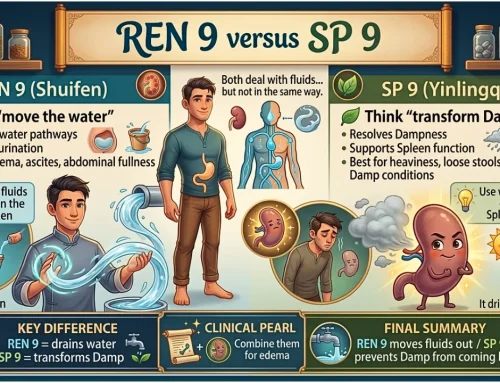
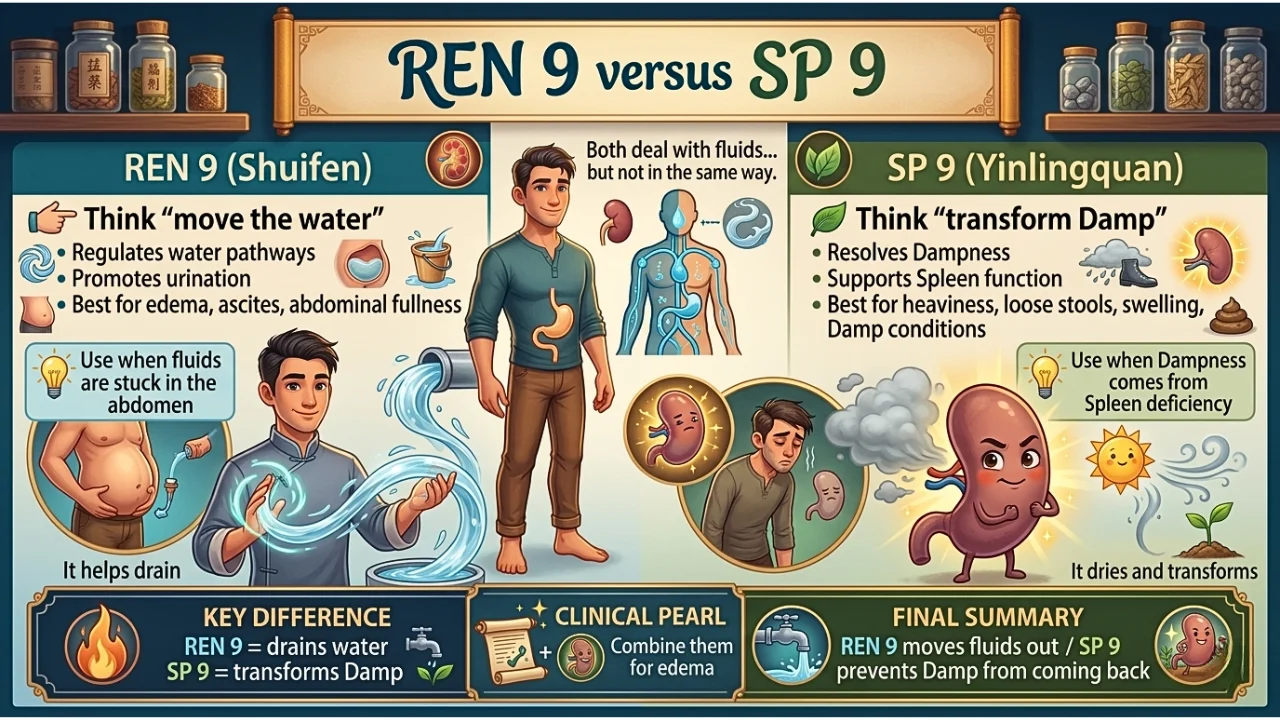
Spleen 9
This is the go-to point for dampness. If I had to choose only one point to treat damp, this would be it. -
Stomach 40
The most important point for phlegm in the entire body. I use this constantly, whether the phlegm is physical or mental. -
Ren 9
Excellent for opening the waterways and supporting fluid metabolism, especially in digestive damp patterns. -
Lung 9
A beautiful point for transforming phlegm in the lungs while also tonifying lung qi and yin. -
Pericardium 6
Harmonizes the stomach and spleen, calms the mind, and works well when nausea or anxiety accompanies dampness.
Depending on the presentation, I’ll combine these with other supportive points such as Spleen 6, Stomach 36, or Bladder 22 to strengthen the root while clearing excess.
Diet and Lifestyle: The Non-Negotiable Piece
You can needle Spleen 9 every week, but if the diet continues to generate dampness, progress will be slow. Dampness is stubborn. It’s yin, sticky, and heavy by nature, so consistency matters.
Foods that tend to worsen dampness and phlegm include:
-
Excess sugar
-
Dairy (especially cheese)
-
Cold and raw foods
-
Greasy or overly processed meals
On the flip side, foods that help dry dampness and move fluids include:
-
Ginger
-
Lemon
-
Asparagus
-
Lightly cooked vegetables
-
Warm, simple meals
Environment also plays a role. Living or working in damp climates, basements, or moldy spaces can aggravate symptoms, and it’s worth addressing these factors when treatments plateau.
Treating Dampness Takes Time, and That’s Okay
One of the most important things to remember (and to remind patients) is that dampness and phlegm don’t resolve overnight. Because these patterns build slowly, they also require patience and consistency to clear.
By combining:
-
Regular acupuncture
-
Thoughtful point selection
-
Dietary guidance
-
Lifestyle adjustments
you’ll see meaningful, lasting improvements over time.
Final Thoughts
Dampness and phlegm are some of the most common, and most misunderstood patterns we treat in Chinese medicine. When you truly understand how they form, how they move through the organs, and how to address both the root and branch, your treatments become far more effective.
I’d love to hear which points you find most useful in your own practice. Keep learning, keep refining, and keep rocking it using TCM, because acupuncture rocks!
Share this article