#120 – Everything You Need to Know About Moxibustion (Podcast)
Listen on Apple Podcasts Listen on Spotify Listen on Amazon Music
🔗 Links mentioned in this episode:
🤰🏼Finally become confident in treating Pregnancy + Postpartum patients – get 6 CEUs!
💌 Sign up to my FREE newsletter here
🩵 Curious if Jane is right for your practice? Book a free demo and get a one-month grace period with code ACUPRO1MO!
☯️ More AcuPro Episodes you’ll love:
How Cupping Therapy Can Support Your Acupuncture Patients
Acupuncture & TCM for Painful Menses
How Foot Reflexology is the Perfect Addition to Your Acupuncture Practice!
Moxa Therapy in Chinese Medicine: History, Benefits, and Practical Use
Today, we’re diving into one of my absolute favorite tools in Chinese medicine: moxibustion, often simply called moxa therapy.
If I’m being honest, moxa is one of the most underused yet powerful therapies I see in modern practice. It’s warming, deeply nourishing, and incredibly effective when used correctly. Whether you’re a student just learning about it or a seasoned practitioner who hasn’t fully integrated it yet, this is your invitation to bring moxa back into the spotlight.
What Is Moxa Therapy?
Moxibustion is a form of heat therapy that uses the herb Artemisia vulgaris (mug wort). The herb is dried, processed, and then burned either near or over specific acupuncture points and areas of the body.
The goal is simple but powerful:
to warm the channels, move Qi and Blood, expel Cold, and strengthen Yang.
In many ways, I like to describe moxa as the sunshine of Chinese medicine. Where there is cold, stagnation, or deficiency, moxa brings warmth, movement, and vitality.
The History: Moxa Before Needles
One of the most fascinating things about moxa is that it actually predates acupuncture.
Historical and archaeological records trace moxibustion back to at least 1600 BC, making it one of the earliest forms of therapy in Chinese medicine. Early practitioners discovered that applying heat to certain areas of the body created therapeutic effects. Over time, patterns emerged, and those patterns eventually contributed to the mapping of the meridian system.
So when we use moxa today, we’re not just applying heat, we’re participating in a lineage of healing that spans thousands of years.
Why Moxa Matters in Modern Practice
In today’s fast-paced clinical environment, moxa is often treated as an afterthought. Something we “add on” if there’s time.
But the truth is, moxa is a core therapy, not a bonus.
It’s especially relevant today because so many of our patients present with:
- Cold conditions
- Chronic fatigue
- Digestive weakness
- Hormonal imbalances
- Stress-related depletion
These are often Yang deficiency or Cold patterns, and acupuncture alone doesn’t always fully address them. This is where moxa becomes essential.
When students ask me about tools like tuina or moxa, I always encourage them to explore beyond the basics — because these therapies can truly transform your clinical results when used consistently.
Practical Applications of Moxa Therapy
Moxa can be used in a variety of ways depending on your clinical setting, patient needs, and safety regulations.
In Canada and many Western countries, we primarily use indirect moxa, meaning there is no direct contact between the burning herb and the skin.
Common Methods Used in Clinic
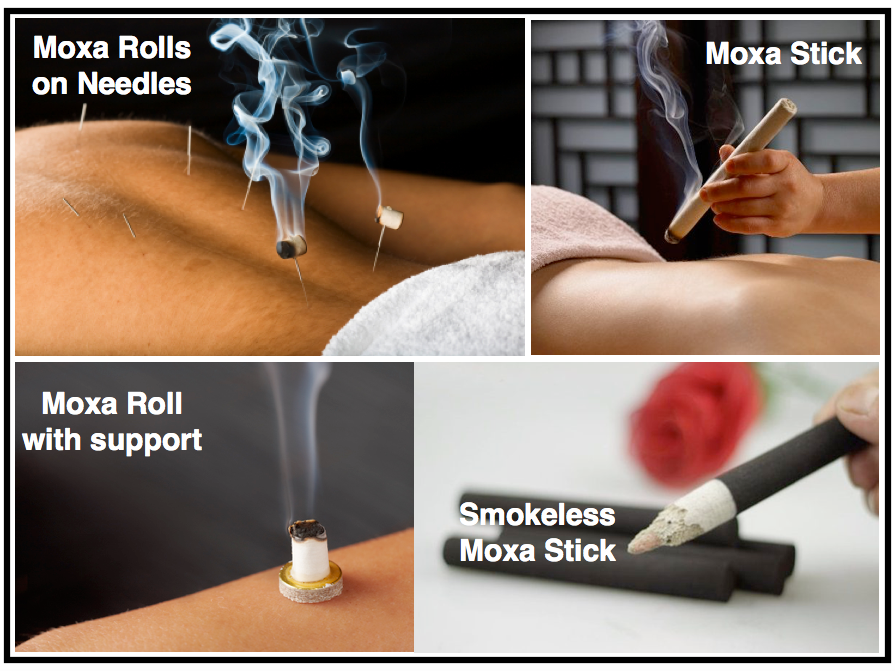
Moxa sticks are one of the most popular and accessible tools. They allow you to gently warm acupuncture points or areas of the body by hovering the heat at a comfortable distance.
Moxa cones can be used on a medium (like ginger or salt) or indirectly over the skin, offering more targeted stimulation.
Moxa boxes are fantastic for treating larger areas like the abdomen or lower back. They provide consistent, penetrating warmth and are especially helpful for deficiency conditions.
Each method has its place, and part of mastering moxa is learning when and how to use each one effectively.
Clinical Uses: When to Reach for Moxa
Moxa truly shines in Cold and deficiency patterns, and its applications are broad.
In clinical practice, I often use moxa for:
- Menstrual cramps due to Cold in the uterus
- Chronic digestive issues related to Spleen Yang deficiency
- Fatigue and low energy
- Chronic pain that improves with warmth
- Cold-type arthritis
One of the most well-known uses of moxa is for breech presentation in pregnancy. When applied correctly (typically at BL 67), moxa can help stimulate fetal movement and encourage optimal positioning.
This is such a beautiful example of how simple, non-invasive techniques can have profound effects.
Safety Considerations
Because moxa involves heat and smoke, safety is essential.
Always ensure:
- You never leave moxa unattended
- The room is well ventilated
- You monitor the patient’s comfort closely
- You have proper tools available (like a moxa extinguisher)
Moxa should feel warm and soothing, never burning or uncomfortable.
Moxa vs. Cold Therapy: Finding Balance
With the rise in popularity of cold exposure therapies like ice baths, I often get asked how this fits into Chinese medicine.
The answer is: it depends on the patient.
From a TCM perspective, if someone already presents with Cold or Yang deficiency, adding more cold can worsen their condition. On the other hand, someone with excess Heat may benefit from cooling approaches.
This is where our diagnostic skills come in. It’s never about trends — it’s about treating the individual in front of you.
Final Thoughts
Moxa therapy is not just an add-on — it’s a deeply rooted, highly effective pillar of Chinese medicine.
When used thoughtfully, it can:
- Strengthen Yang
- Improve circulation
- Support chronic conditions
- Enhance your treatment outcomes
If you’re not already using moxa regularly in your practice, consider this your gentle nudge to start integrating it more intentionally.
You’re not just applying heat — you’re continuing a healing tradition that has stood the test of time.
Disclaimer
The AcuPro Show podcast and material shared through AcuPro Academy is a subdivision of Natural Health Sense Incorporated. Designed solely for educational and entertainment purposes. The utilization of information from this podcast or any associated material is at the user’s discretion and risk. This content is not meant to replace the guidance of an acupuncturist. Nor Chinese medicine doctor, medical doctor, physician, or any qualified professional. It is not a substitute for proper diagnosis or treatment. Users are strongly advised not to ignore or postpone seeking medical advice for any existing medical condition with their healthcare professional. Regarding any health concerns.
Need the podcast transcript? Click here!
Share this article