#108 – How to Use the 67 Acupuncture Points of the Bladder Meridian (Podcast)
Listen on Apple Podcasts Listen on Spotify Listen on Amazon Music
🔗 Links mentioned in this episode:
🇬🇧 Get your copy of AcuPoints Made Easy Book or PDF here!
🇫🇷 PDF ou Livre Points d’Acupuncture Simplifiés ici!
🩵 Curious if Jane is right for your practice? Book a free demo and get a one-month grace period with code ACUPRO1MO!
☯️ More AcuPro Episodes you’ll love:
Acupuncture Points of the Kidney Meridian
Acupuncture Points of the Lung Meridian
Acupuncture Points of the Large Intestine Meridian
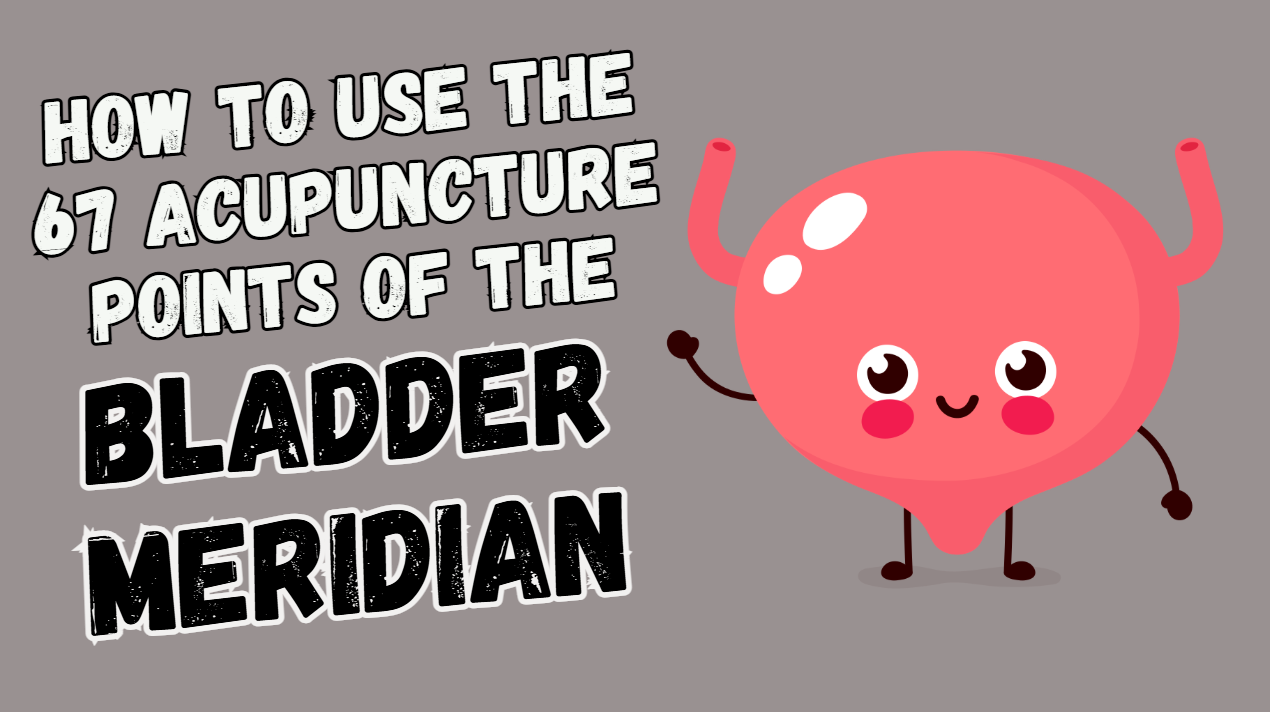
Bladder Meridian TCM and Its Importance
Before we jump into specific acupuncture points, it’s essential to revisit the role of the Bladder system in Chinese Medicine. In TCM, the Bladder is far more than a simple storage organ: it is a key player in fluid metabolism, nervous system regulation, and emotional processing.
Paired with the Kidney, the Bladder is responsible for transforming fluids and excreting what the body no longer needs. When this transformation is impaired, symptoms like edema, urinary issues, heaviness, fatigue, or even musculoskeletal pain can arise. Because the Bladder is the yang partner of the Kidney, it reflects how well we adapt, respond, and “let go” both physically and emotionally.
Emotionally, the Bladder system is closely tied to unresolved fear, jealousy, envy, resentment, and long-held grudges. This is especially evident in pediatrics: children who struggle with bedwetting often have underlying fears or insecurity. In adults, chronic bladder issues, low back pain, or tension along the spine can often point to emotional patterns that have never fully been released.
Pathway and Functions of the Bladder Meridian
The Bladder meridian is the longest meridian in the body and the most expansive. As a yang meridian, it travels over the head, down the entire back, along the posterior legs, and ends at the little toe. Its pathway alone explains why it plays such a central role in treating pain, stress, emotional tension, and internal organ dysfunction.
One of the most powerful features of the Bladder channel is the Back-Shu points, which directly connect to the Zang-Fu organs. Through these points, the Bladder meridian influences:
-
Mental and emotional health
-
Digestive function
-
Respiratory health
-
Hormonal and reproductive balance
-
Chronic fatigue and immune resilience
The Bladder channel is most active between 3:00 and 5:00 PM, a time when many people experience a noticeable dip in energy. Clinically, this is often linked to dehydration, poor fluid metabolism, or overwork. Supporting the Bladder during this time (hydration, gentle movement, or acupuncture) can make a significant difference in energy levels.
Bladder Points: Clinical Pearls and Practical Applications
The Bladder channel offers an incredible range of treatment possibilities, from head to toe.
Bladder 1 & Bladder 2
Both points are excellent for eye conditions such as redness, dryness, strain, or headaches related to the eyes. Clinically, I favor Bladder 2 because it is safer and easier to needle. A fun and often-overlooked use of Bladder 2? It’s remarkably effective for hiccups.
Bladder 3–10
These points are invaluable for conditions affecting the head and sensory organs. They’re commonly used for:
-
Dizziness and vertigo
-
Headaches (especially occipital or tension-type)
-
Sinus congestion and nasal obstruction
Because the Bladder channel runs over the brain and spinal cord, these points are excellent for clearing sensory overload and calming an overstimulated nervous system.
Bladder 11 – Influential Point of Bone
This is a must-use point for bone-related conditions. I regularly use Bladder 11 in cases of osteoarthritis, chronic joint degeneration, and post-menopausal bone weakness, especially when combined with Kidney tonification.
Back-Shu Points (Bladder 13–28)
These are some of the most clinically powerful points in acupuncture. Each Shu point corresponds to an internal organ and allows us to directly influence its function. Whether you’re supporting Lung qi, calming the Heart, strengthening digestion, or tonifying the Kidneys, these points are foundational in internal medicine treatments.
Emotional Release and Deep Healing
Some Bladder points go far beyond physical symptoms.
Bladder 62, one of the opening points of the Yang Qiao Mai, is also known as a ghost point. I often use it in cases involving childhood trauma, chronic anxiety, or deep emotional tension that lives in the body. It’s especially helpful when patients feel “on edge” or unable to fully relax, even when their lives seem stable.
Bladder 67 is another fascinating point. While it is contraindicated for needling during pregnancy, it is famously effective when used with moxa to help turn breech babies. This beautifully illustrates the dynamic, transformative power of the Bladder channel when used correctly.
Final Thoughts
The Bladder system reminds us that health is about flow—of fluids, emotions, thoughts, and energy. When the Bladder channel is open and balanced, patients often experience not just physical relief, but a sense of emotional lightness and resilience.
Whether you’re treating pain, emotional stagnation, internal organ dysfunction, or simply supporting your patient’s ability to adapt to life’s stresses, the Bladder meridian is an invaluable ally in clinical practice.
Keep exploring it—you’ll be amazed at how much healing happens along the back of the body.
Disclaimer
The AcuPro Show podcast and material shared through AcuPro Academy is a subdivision of Natural Health Sense Incorporated. Designed solely for educational and entertainment purposes. The utilization of information from this podcast or any associated material is at the user’s discretion and risk. This content is not meant to replace the guidance of an acupuncturist. Nor Chinese medicine doctor, medical doctor, physician, or any qualified professional. It is not a substitute for proper diagnosis or treatment. As well as users are strongly advised not to ignore or postpone seeking medical advice. For any existing medical condition with their healthcare professional. Regarding any health concerns.
Need the podcast transcript? Click here!
Share this article