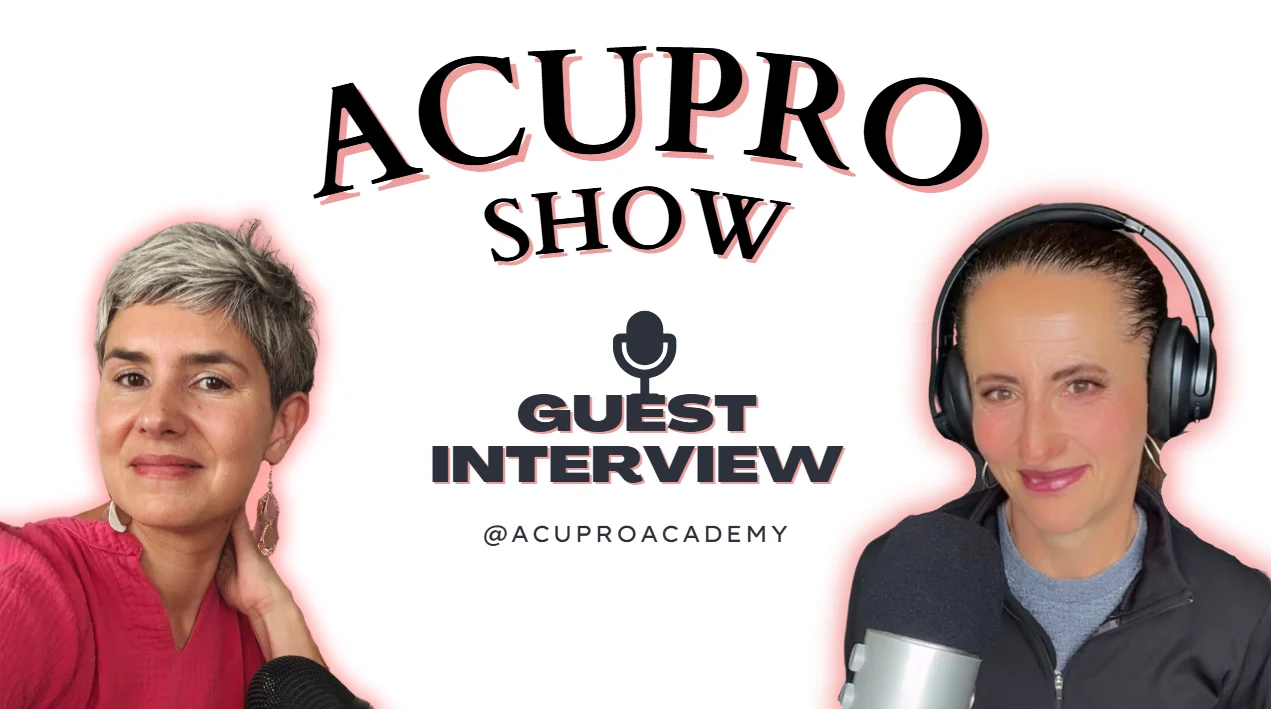
#88 – Understanding Vulvodynia in Chinese Medicine with Jennifer Dubowsky (Podcast)
Listen on Apple Podcasts Listen on Spotify Listen on YouTube Listen on Amazon Music
 Links mentioned in this episode:
 Balance System Acupuncture Foundations Online Courses
Jenny’s Website page on Vulvodynia
Adventures in Chinese Medicine: Acupuncture, Herbs and Ancient Ideas for Today
National Vulvodynia Association
Show Notes
Vulvodynia is a condition affecting an estimated 7 million women in the United States, yet it remains rarely discussed in both Western medical circles and Traditional Chinese Medicine (TCM) classrooms. In this episode of The AcuPro Show, I’m joined by Chicago acupuncturist Jennifer Dubowsky, a practitioner whose passion for women’s health has led her to focus deeply on this often-overlooked disorder.
What Is Vulvodynia?
Vulvodynia is a medical condition involving pain in the vulva—the external part of a woman’s genitalia—lasting for at least three months without an identifiable cause. It can manifest as burning, irritation, or even itchiness. The impact on women’s lives is profound, from affecting intimacy to restricting clothing choices and daily activities. Many women feel reluctant to seek help due to embarrassment or shame.
There are two main categories:
-
Localized Provoked Vulvodynia – pain in a specific area of the vulva, often triggered by touch or pressure.
-
Generalized Vulvodynia – more diffuse vulvar pain that can occur spontaneously.
How Can TCM Help with Vulvodynia?
As TCM practitioners, it’s crucial to recognize common patterns such as Damp-Heat in the Lower Jiao when approaching vulvodynia. My conversation with Jenny emphasized utilizing targeted acupuncture protocols alongside pelvic floor physical therapy for comprehensive care.
From a TCM perspective, vulvodynia is often associated with:
-
Damp-Heat in the Lower Jiao (most common)
-
Liver Qi stagnation
-
Blood stasis or Yin deficiency, depending on constitution and history
Jenny’s Personal Journey
Jenny first encountered a vulvodynia patient early in her career, long before she even knew the name of the condition. That experience sparked her research into how TCM could help. Over time, she has written extensively on the subject, connected with women from around the world, and become a trusted voice in empowering women to seek the help they need.
Treatment Insights and Strategies
During our chat, Jenny and I exchanged insights about the approaches to dealing with vulvodynia:
-
Balance Method & Master Tung Points – Jenny prefers mirror-imaging techniques and distal point strategies, such as SP6, LV3, Ling Gu, Fu Ke, and sinus points, rather than heavy local needling.
-
Consistent Treatment – Regular sessions, especially twice a week in the beginning, can help manage the chronic aspect of vulvodynia more effectively.
-
Lifestyle Adaptations – Small changes, such as using a Diva Cup instead of tampons, avoiding lubricants with propylene glycol, and wearing breathable fabrics, can significantly reduce irritation.
-
Stress Reduction – Incorporating points like DU20 and addressing emotional strain is key in supporting healing.
Empathy and Empowerment
Above all, we emphasized the importance of empathy and patient empowerment. Many women with vulvodynia have felt ignored or dismissed. Our aim as practitioners is to:
-
Validate their experience
-
Offer practical resources and referrals (such as the National Vulvodynia Association)
-
Encourage a multidisciplinary approach when needed
-
Provide hope and assurance that they are not alone in their healing journey
Disclaimer
The AcuPro Show podcast and material shared through AcuPro Academy are subdivisions of Natural Health Sense Incorporated. Designed solely for educational and entertainment purposes. The utilization of information from this podcast or any associated material is at the user’s discretion and risk. This content is not meant to replace the guidance of an acupuncturist. Nor a Chinese medicine doctor, medical doctor, physician, or any qualified professional. It is not a substitute for proper diagnosis or treatment. Additionally, as well as users are strongly advised not to ignore or postpone seeking medical advice. For any existing medical condition, with their healthcare professional. Regarding any health concerns.
Need the podcast transcript? Click here!
Share this article