

TOP Acupuncture Points for ANGER in TCM
As acupuncture students and practitioners, we know that emotions are not abstract—they live in the body and affect the movement of Qi and Blood. Among all emotions, anger is one of the most clinically common, yet it’s often misunderstood.
Globally, 22% of adults report feeling angry most of the time, and studies show 65% of office workers have experienced “office rage.” These statistics aren’t just social commentary—they’re diagnostic red flags. When a patient tells you, “I yell at my kids the minute I walk in the door,” that’s not just emotional reactivity—it’s a possible Liver disharmony asking to be treated.
Today, I’m going to walk you throughIn today’s video, I will walk you through the Chinese medicine perspective on anger, exploring its full spectrum—from impatience and frustration to irritability, anger, and even extreme rage. Then, I’ll discuss symptoms, root causes, and how we address them using Acupuncture and Chinese medicine, as well as practical stress management techniques you can share with your patients to help them prevent anger from taking over.
Let’s go!
Clara
TCM Geek
Links mentioned in this video:
 TCM Diagnosis Made Easy Masterclass
 TCM Treatments Made Easy Book or PDF


 Study: https://pubmed.ncbi.nlm.nih.gov/38699452/
TOP Acupuncture Points for ANGER in TCM
Firstly, in TCM, we recognize a progression: impatience → frustration → irritability → anger → rage. While Western psychology often treats these as behaviour or mood issues, we see them as signs of Qi obstruction, internal Heat, or Liver imbalance.
The Root Causes of Anger May Include:
Psychological & Emotional:
-
Suppressed resentment, injustice, or disappointment
-
Fear of failure, powerlessness, or unresolved trauma
-
Mental health conditions (anxiety, depression, BPD)
Physiological:
-
Chronic stress, fatigue, and hormonal dysregulation
-
Neurological overstimulation (excessive amygdala activity, poor frontal cortex inhibition)
-
Medication side effects (e.g., statins) or liver pathology
External Triggers:
-
Environmental chaos, workplace friction, and relationship issues
-
Childhood trauma or PTSD patterns
Clinical Pearl: Always assess a patient’s history of trauma or suppressed emotional expression when treating Liver Qi stagnation with irritability. These root causes often differentiate simple stagnation from more complex internal Heat or Shen disturbance.
How Chronic Anger Shows Up in the Body
Secondly, the effects of long-term anger are somatic and systemic. If Liver Qi doesn’t move, neither will the Blood or emotions.
Common physical signs include:
-
Headaches and migraines, especially temporal or vertex
-
Muscle tension (neck, jaw, shoulders)
-
Digestive issues: IBS, reflux, nausea (Liver overacting on Spleen/Stomach)
-
Sleep disturbance (difficulty falling asleep or vivid, angry dreams)
-
Hypertension, chest tightness, palpitations
-
Menstrual irregularities (especially with PMS and breast distention)
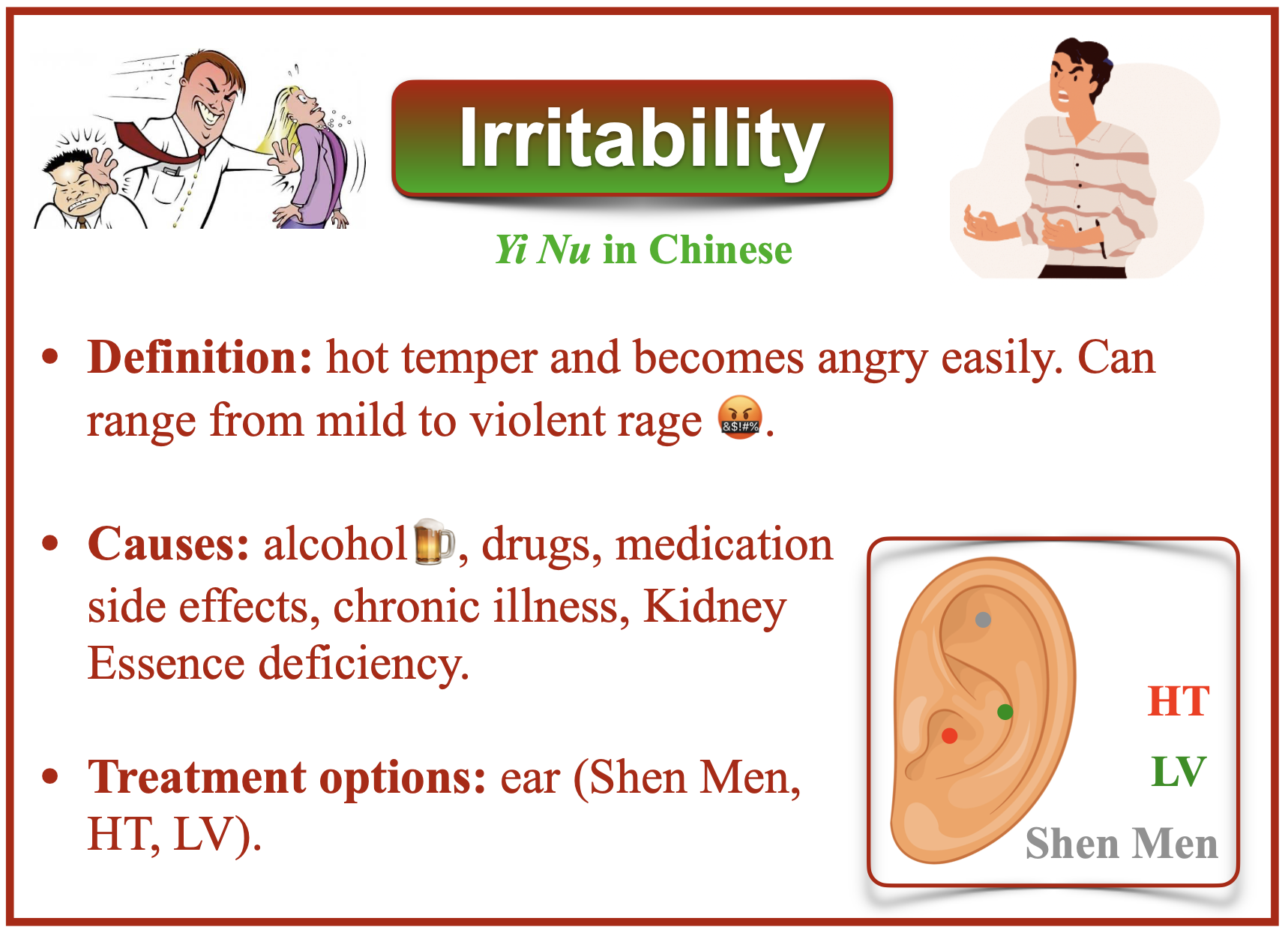
TCM View: Liver, the Wood Element, and Emotional Flow
Thirdly, in Five Element theory, anger corresponds to the Liver and Wood element, whose nature is movement and flexibility. When movement is restricted—by repression, trauma, or stress—the Liver reacts.
Key Liver Patterns:
-
Qi Stagnation – most common; irritability, sighing, PMS, distention
-
Liver Fire or Liver Yang Rising – red eyes, headaches, outbursts, tinnitus
-
Liver Attacking Spleen/Stomach – IBS, nausea, hypochondriac pain
-
Blood Deficiency – less angry but more irritable, moody, and tense
-
Liver/Kidney Yin Deficiency – longer-term anger leading to Yin depletion, insomnia, heat signs
Related Emotional Pathologies:
-
Fear (Water) can generate Anger
-
Worry (Earth) may over-control it
-
Sadness (Metal) can insult the Wood element
Treatment Strategies for Anger in Clinical Practice
Fourthly, anger treatment requires choosing points that not only address the Liver but also harmonize the Shen and support the root imbalances (e.g., Yin deficiency, Spleen damage).
Top Acupuncture Point Strategies:
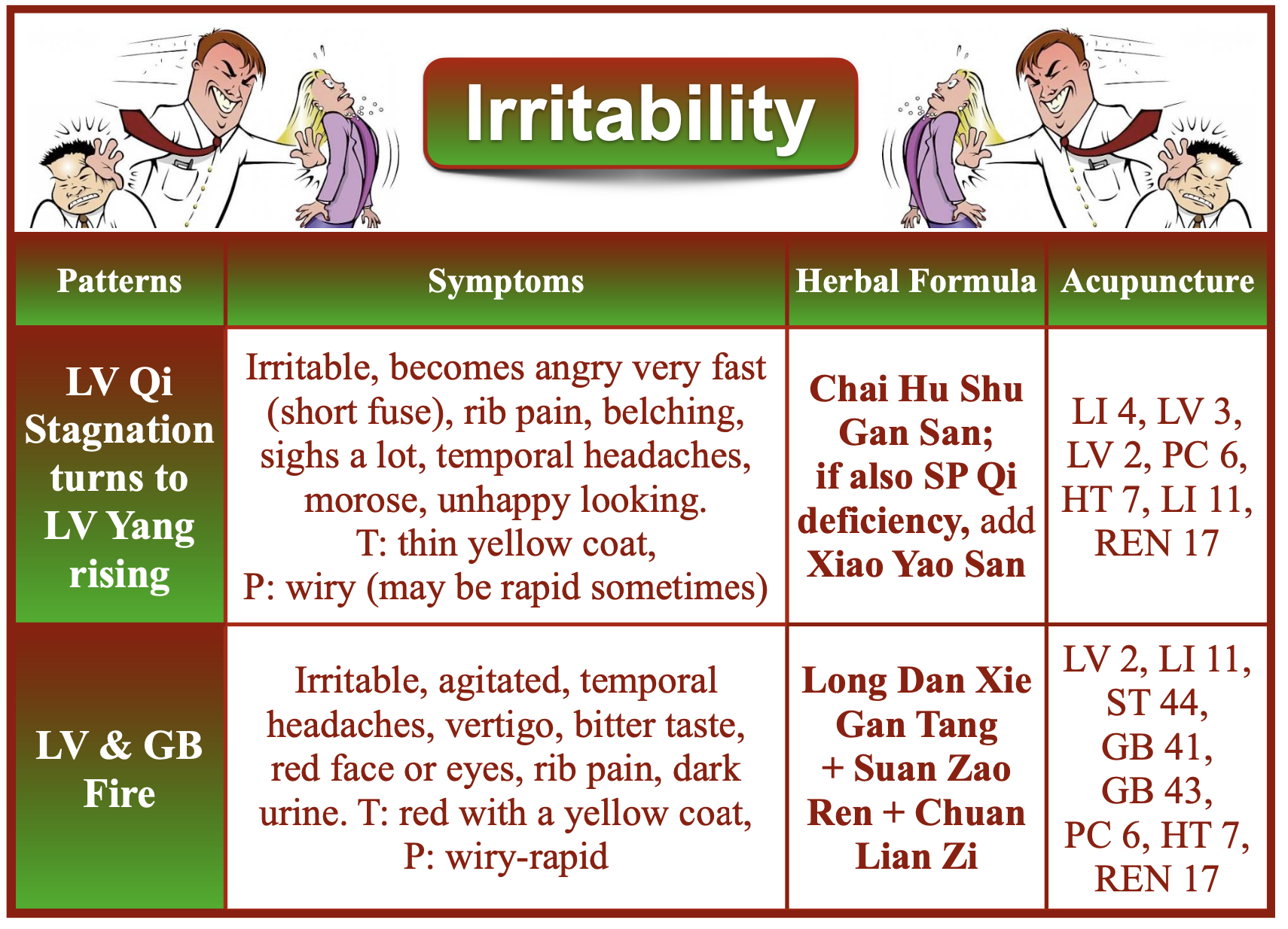
For Liver Qi Stagnation:
-
LV 3 + GB 34 – move Qi, soften rigidity
-
PC 6 – regulate Shen, open chest
-
SP 6 – support Spleen and emotional digestion
For Liver Fire / Yang Rising:
-
LV 2 – clear Fire
-
LI 11 – drain Heat
-
DU 20, GB 20, Tai Yang – anchor Yang, release pressure
For Emotional Regulation:
-
Yin Tang – calm Shen, soften intensity
-
HT 7 / Shen Men (ear) – root Spirit
-
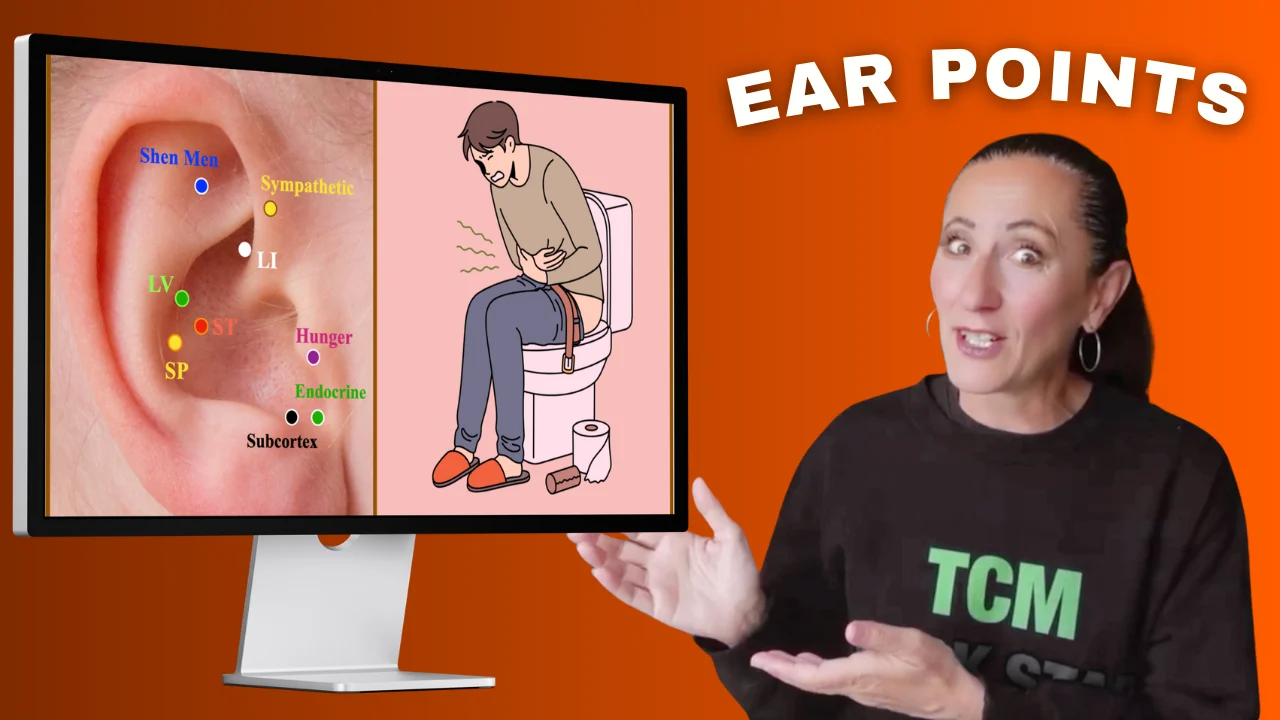
Ear points: Liver, Heart, Shen Men, Sympathetic
Case Insight: If the anger is sharp, sudden, and explosive, suspect Liver Fire. If it’s more brooding, internalized, and tied to stress, treat Liver Qi stagnation with underlying Blood or Yin deficiency.
Lifestyle + Dietary Tools for Support
Supplements for Stress/Anger Management:
-
L-Theanine – calm alertness, reduces reactivity
-
Magnesium (glycinate or threonate) – muscle & mood support
-
Omega-3s – reduce inflammation and stabilize mood
-
Ashwagandha – adaptogen to calm HPA axis (when appropriate)
Foods to Recommend:
-
Greens, sprouts, sour foods – move Liver Qi
-
Chia, walnuts, flax – nourish Yin and calm inflammation
-
Avocado, root vegetables – ground and nourish
Foods to Limit or Avoid:
-
Spicy, greasy, fried foods
-
Excess caffeine and alcohol
-
Refined carbs (mood swings via blood sugar spikes)
Movement & Mind-Body Integration
Lastly, Qi Gong and Tai Chi are exceptional for supporting the Liver, smoothing Qi, and reconnecting to internal rhythm. Several studies show Qi Gong reduces anger, depression, and autonomic dysregulation in emotionally reactive individuals.
Encourage patients to engage in:
-
Daily walks in nature
-
Tai Chi classes (even online!)
-
Breathing with movement to “unclog” Liver Qi
Final Thoughts: Treating the Root of Anger is an Act of Compassion
As TCM students and practitioners, your understanding of emotional disharmony is profound. When you treat anger, you’re not just addressing mood—you’re restoring the flow of life force.
Whether through a carefully placed needle at LV 2, or gently guiding a patient toward mindful breathwork and dietary changes, every treatment is a step toward emotional freedom.
Anger is not bad—it’s stuck. And your role is to help it move again.
Let this post also be your reminder: You can only guide others toward balance when you’re supporting your own.
Share this article

Written by : AcuPro Academy (Clara)
Related Posts

2 Comments
Leave A Comment


Latest articles
March 26, 2026



I have found that placing two fingers on my temples can calm myself down (increase compassion), although that placement is not directly on any point, but close to TB-23 and GB-1. I saw the idea of placing the fingers on the temples from Donna Eden’s Energy Medicine book. She places a lot of importance on the TB meridian, and interprets it as the immune system, as you might know.
Thanks!
That’s awesome! Thank you for sharing 🙂