#79 – Tongue Diagnosis in Chinese Medicine (Podcast)
Listen on Apple Podcasts Listen on Spotify Listen on Amazon Music
🔗 Links mentioned in this episode:
Mastering TCM Diagnosis: From Theory to Practice Masterclass
Chinese Medicine Made Easy Book/PDF
Show Notes
In Traditional Chinese Medicine, there are four key methods of diagnosis: inquiry, observation, palpation, and listening/smelling. Among these, the tongue plays a crucial role in the observation process. It provides significant insights into a person’s qi, blood, and organ health. During consultations, I typically carry out inquiries alongside observation, checking the demeanour, facial colour, and, of course, what we’re focused on in this blog: the tongue.
Exploring the Tongue
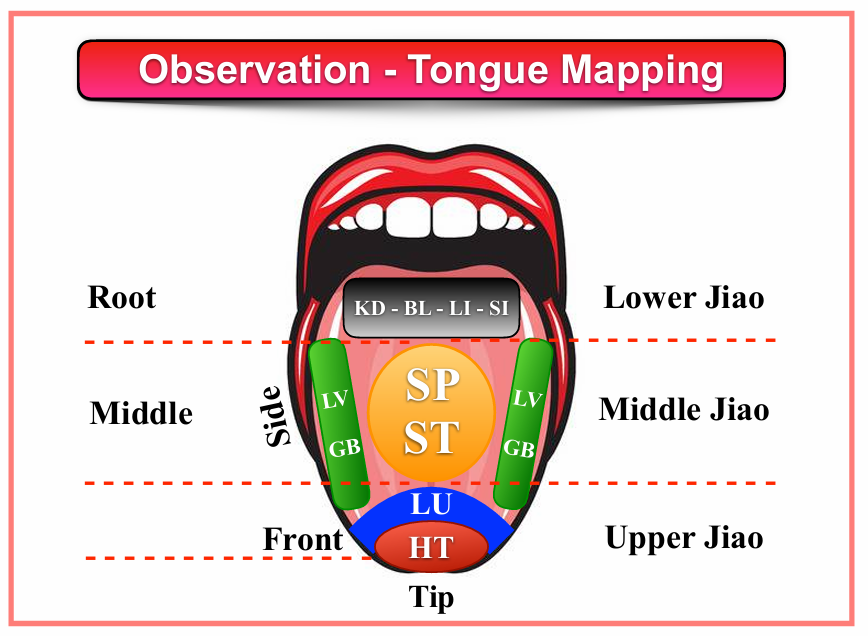
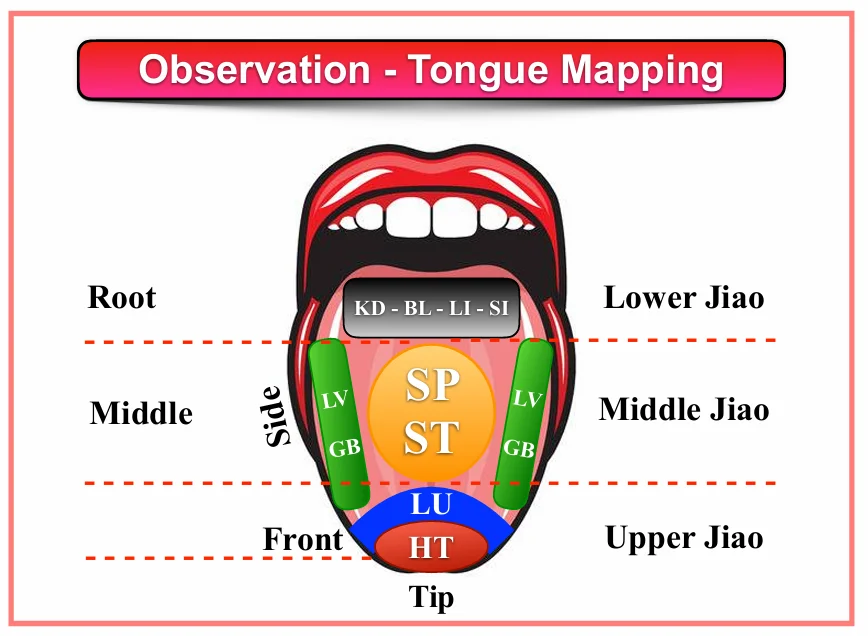
The tongue is a complex map of your body’s health. The tip represents the heart, while the front correlates with the lungs. The center reflects the spleen and stomach, whereas the sides show conditions of the liver and gallbladder. The tongue’s body colour can indicate various health issues, from blood stasis to internal cold.
A standout feature in TCM is tongue diagnosis, which provides insights into the internal state of organs. The tongue is a fantastic example of reading the body’s signals. The tongue is examined based on:
Tongue Diagnosis in Chinese Medicine: Colours and Their Meanings
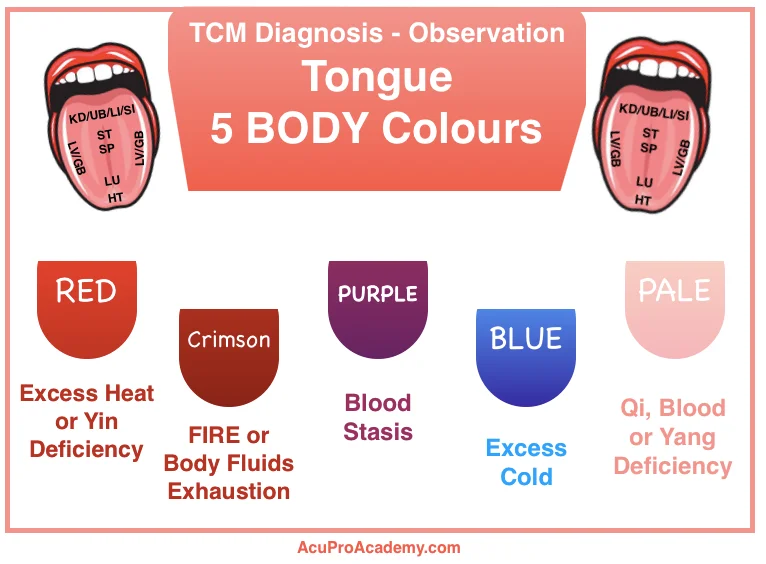
- Red: Indicates heat, which can be caused by excess or deficiency.
- Crimson: Suggests body fluid exhaustion or excess fire.
- Purple: Points to blood stasis.
- Blue: Implies excess internal cold.
- Pale: Can be a sign of qi, blood, or yang deficiency.
Each colour offers clues about health conditions, which in turn inform treatment plans.
The Coating and Moisture
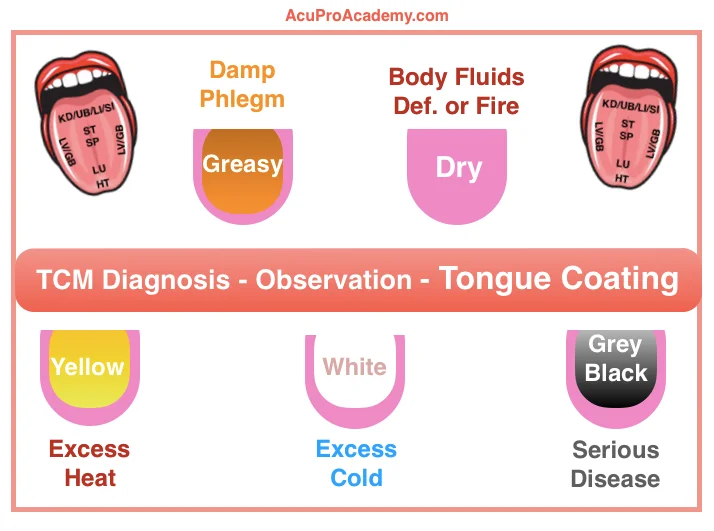
The tongue’s coating and moisture levels are equally telling. A yellow coat is associated with excess heat, while a white coat may indicate excess cold. A gray or black coat might suggest serious disorders. It’s important to note that recent activities like eating coloured foods or smoking can temporarily affect the tongue’s coating.
Shape and Characteristics
The shape of the tongue also provides critical information. A thin tongue can mean blood deficiency, whereas a swollen tongue may indicate yang deficiency. Teeth marks on the sides suggest spleen qi deficiency, often stemming from stress. If the tongue is quivering or stiff, it could suggest internal wind or nervousness.
Practical Application of Tongue Diagnosis in Chinese Medicine
We need to observe all these aspects in detail, combining them with inquiries to form a complete diagnosis. Practicing on a variety of tongues will improve your skills, making diagnosis more intuitive over time. Always remember that tongue diagnosis is just one part of the whole picture, helping us treat patients holistically and effectively.
Understanding the tongue’s signals is vital in TCM, as it offers profound insights into one’s internal health. Whether you’re a student or a practitioner, this journey into tongue diagnosis is as much about the practice as it is about the knowledge.
Characteristics of the Tongue: Body’s Clues to Look for
- Thin: Blood or Yin deficiency
- Swollen (Fat): dampness (red body: damp-heat; pale body: Yang def.)
- Stiff: interior Wind (precursor of stoke!), extreme heat in HT, Phlegm retention
- Flaccid: Body fluids deficiency, LV & KD Yin extreme exhaustion (if the coat is dry & the body is deep-red)
- Long: HT heat
- Short: interior cold stagnation, or if body red & no coat: extreme Yin deficiency
- Cracked: Horizontal (ST Yin def.), Midline long crack reaching the tip (HT Yin def.), shallow crack not reaching the tip (ST Yin def.)
- Deviated: interior Wind
- Tremor-like (shaking): interior Wind
- Quivering: SP Qi def.
- Teeth-marks: SP Qi def., Yang def. (if pale body & wet coat)
- Prickled (strawberry-like): Excess Toxic heat
Disclaimer
The Acupro Show podcast and material shared through Acupro Academy is a subdivision of Natural Health Sense Incorporated. Designed solely for educational and entertainment purposes. The utilization of information from this podcast or any associated material is at the user’s discretion and risk. This content is not meant to replace the guidance of an acupuncturist. Nor Chinese medicine doctor, medical doctor, physician, or any qualified professional. It is not a substitute for proper diagnosis or treatment. Additionally, as well as users are strongly advised not to ignore or postpone seeking medical advice. For any existing medical condition with their healthcare professional. Regarding any health concerns.
Need the podcast transcript? Click here!
Share this article

Written by : AcuPro Academy (Clara)
Related Posts




Latest articles
April 8, 2026