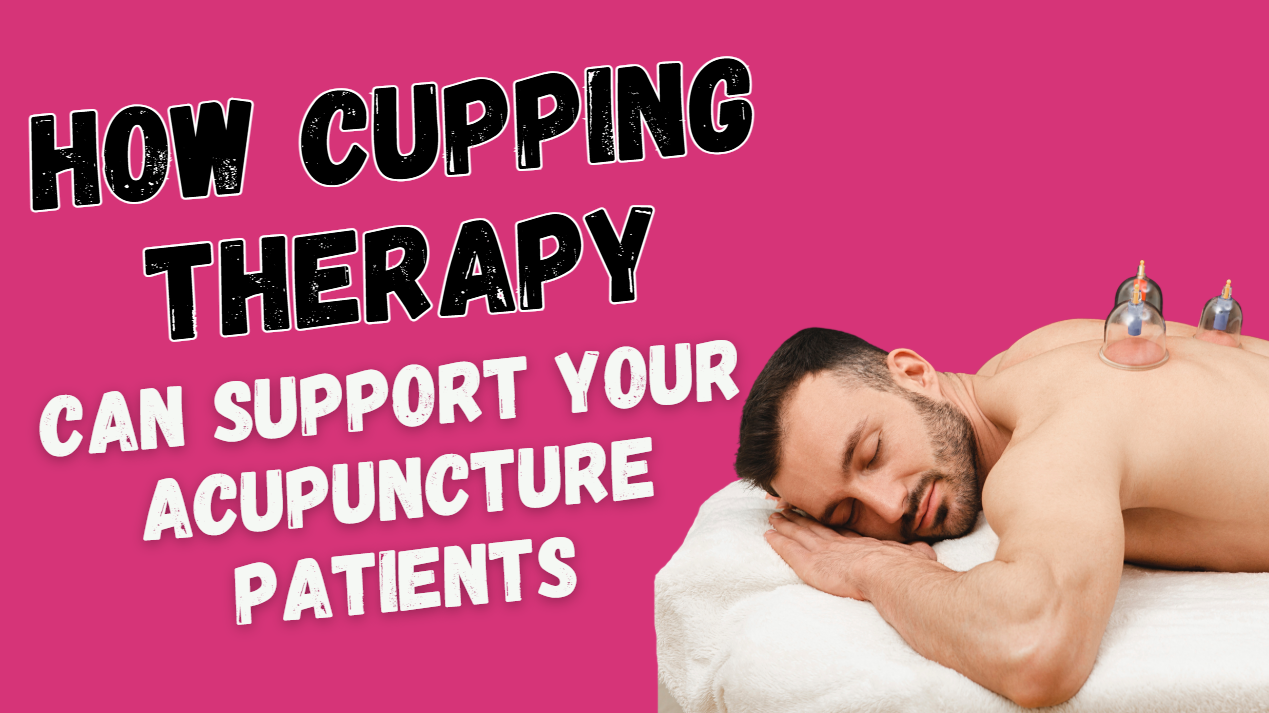
#112 – How Cupping Therapy Can Support Your Acupuncture Patients (Podcast)
Listen on Apple Podcasts Listen on Spotify Listen on Amazon Music
🔗 Links mentioned in this episode:
📍Learn Scalp Acupuncture and bring this highly effective pain-relieving method to your practice!
💌 Sign up to my FREE newsletter here
🩵 Curious if Jane is right for your practice? Book a free demo and get a one-month grace period with code ACUPRO1MO!
☯️ More AcuPro Episodes you’ll love:
Your Go-To Protocol for Frozen Shoulder DURING Menopause
The BEST Acupuncture Points for Lower Back Pain
Acupuncture & TCM for Painful Menses
Cupping Therapy: An Ancient Healing Art That Still Delivers Powerful Results
When people think of Traditional Chinese Medicine, acupuncture usually comes to mind first. But as you already know, Chinese medicine extends far beyond needles. It functions as a complete medical system that draws on a wide range of therapeutic tools, including heat, herbs, movement, nutrition, manual therapies, and one of my absolute favourites: cupping therapy.
Practitioners have used cupping for centuries across many healing traditions, and today it remains one of the most effective, accessible, and versatile techniques in clinical practice. Whether you’re a student just starting out or a seasoned practitioner refining your skills, cupping deserves a permanent place in your clinical toolbox.
A Brief (and Fascinating) History of Cupping
One of the things I love most about cupping is that it doesn’t belong exclusively to Chinese medicine. Cultures around the world developed their own forms of cupping independently, including ancient Egypt, Greece, the Middle East, and many parts of Asia. Hippocrates himself wrote about cupping for musculoskeletal pain, while Middle Eastern practitioners have used Hijama for centuries.
This shared history tells us something important. Without communication or shared theory, different cultures all recognized the therapeutic power of suction. Across time and geography, practitioners observed that drawing blood and qi to the surface could relieve pain, improve circulation, and support healing. That kind of consistency across cultures is hard to ignore.
Modern Cupping Tools and Techniques
While cupping theory remains rooted in traditional principles, the tools themselves have evolved significantly. Today’s practitioners commonly use glass, plastic, and silicone cups, which makes cupping safer, more adaptable, and easier to integrate into modern practice.
Here are some of the most commonly used cupping techniques and how they are applied clinically:
Fixed (Stationary) Cupping
Practitioners place cups on a specific area and leave them in place for several minutes. This technique works beautifully for local stagnation, muscle tightness, headaches, and chronic pain patterns.
Quick (Flash) Cupping
With this method, cups are applied and removed rapidly. I often choose flash cupping for deficient or sensitive patients, elderly patients, or those dealing with conditions like fibromyalgia where strong stimulation isn’t appropriate.
Moving (Sliding) Cupping
My personal favourite. After applying oil, I gently move the cups along muscles or channels. This technique works incredibly well for myofascial tension, neck and shoulder pain, and stress-related stagnation—and patients usually love how it feels.
Fire Cupping
Practitioners traditionally use fire cupping to add warmth and move cold stagnation. Although regulations vary by region, fire cupping remains a powerful technique when used safely and appropriately.
Wet Cupping (Hijama)
This method involves light bleeding after superficial skin pricks. While it isn’t suitable (or legal) everywhere, wet cupping has a long historical tradition and clear clinical applications when performed correctly.
Safety, Side Effects, and Patient Education
Like any therapeutic technique, cupping requires skill, proper training, and clear communication. One of the most common side effects patients notice is the appearance of dark purple or red marks. Although these marks are completely harmless, they can surprise patients, especially when practitioners don’t prepare them in advance.
I’ll never forget receiving a very concerned phone call from a patient’s husband who thought something had gone terribly wrong. That experience reinforced just how essential patient education really is. When you explain why marks appear, how long they last, and what they mean in TCM terms, you prevent unnecessary fear and strengthen patient trust.
Practitioners should take extra care with:
-
Elderly or very deficient patients
-
Individuals with fragile skin or bleeding disorders
When in doubt, gentler techniques like flash cupping or silicone cupping offer excellent alternatives.
Clinical Applications You Might Not Expect
Although many people associate cupping with athletes and musculoskeletal pain (and yes, it is fantastic for those cases) it also supports a much wider range of conditions than many practitioners realize.
Cupping can support:
-
Neck, shoulder, and low back pain
-
Stress-related tension and stagnation
-
Hangovers (yes, really!)
One of my favorite reminders came from a patient from Ukraine who shared how her family traditionally used cupping for digestive issues. Moments like that always humble me and highlight how these techniques live far beyond textbooks and classrooms.
Why Cupping Belongs in Every Practice
Cupping stands out as a rare technique that’s relatively easy to learn yet incredibly powerful when applied skillfully. It blends seamlessly with acupuncture, requires minimal equipment, and delivers results patients can feel immediately.
Whether you’re a student building confidence, a new graduate refining your clinical style, or a long-time practitioner expanding your offerings, cupping therapy has something valuable to offer. When used thoughtfully, it deepens treatments, enhances patient outcomes, and brings a surprising amount of joy into clinical practice.
Disclaimer
The AcuPro Show podcast and material shared through AcuPro Academy is a subdivision of Natural Health Sense Incorporated. Designed solely for educational and entertainment purposes. The utilization of information from this podcast or any associated material is at the user’s discretion and risk. This content is not meant to replace the guidance of an acupuncturist. Nor Chinese medicine doctor, medical doctor, physician, or any qualified professional. It is not a substitute for proper diagnosis or treatment. As well as users are strongly advised not to ignore or postpone seeking medical advice. For any existing medical condition with their healthcare professional. Regarding any health concerns.
Share this article